
Basement Waterproofing Systems: How Different Systems Control Water
Basement waterproofing systems are often described as choices you make. In practice, they are responses to how water behaves around and beneath a home. Each system exists because a specific failure pattern exists. When that pattern is present, the system works. When it isn’t, the system struggles.
This guide explains the major basement waterproofing systems you’ll encounter, what problem each one is designed to control, how they function, and where their limits are—without recommending one over another.
What a Waterproofing “System” Actually Is
A waterproofing system is not a product or a coating. It’s a functional chain.
Most systems follow this sequence:
Water reaches the foundation
Pressure builds or movement occurs
Water finds an entry pathway
A system intercepts, redirects, or blocks that movement
Understanding systems starts with understanding which step they intervene at.
In building science terms, waterproofing systems are pressure-management tools. They do not eliminate groundwater. They manage its behavior.
Interior Drainage Systems
What Problem They Address
Interior drainage systems exist to manage predictable, pressure-driven seepage that appears at the wall-floor joint or beneath the slab.
How They Work
These systems collect water after it reaches the foundation but before it spreads into the basement. Channels installed along the interior perimeter guide water to a discharge point.
They are designed for:
- Consistent seepage patterns
- Rising groundwater pressure
- Controlled collection and redirection
Where They Reach Their Limit
Interior drainage does not stop water from contacting foundation walls. It manages water after contact, not before.
Exterior Drainage Systems
What Problem They Address
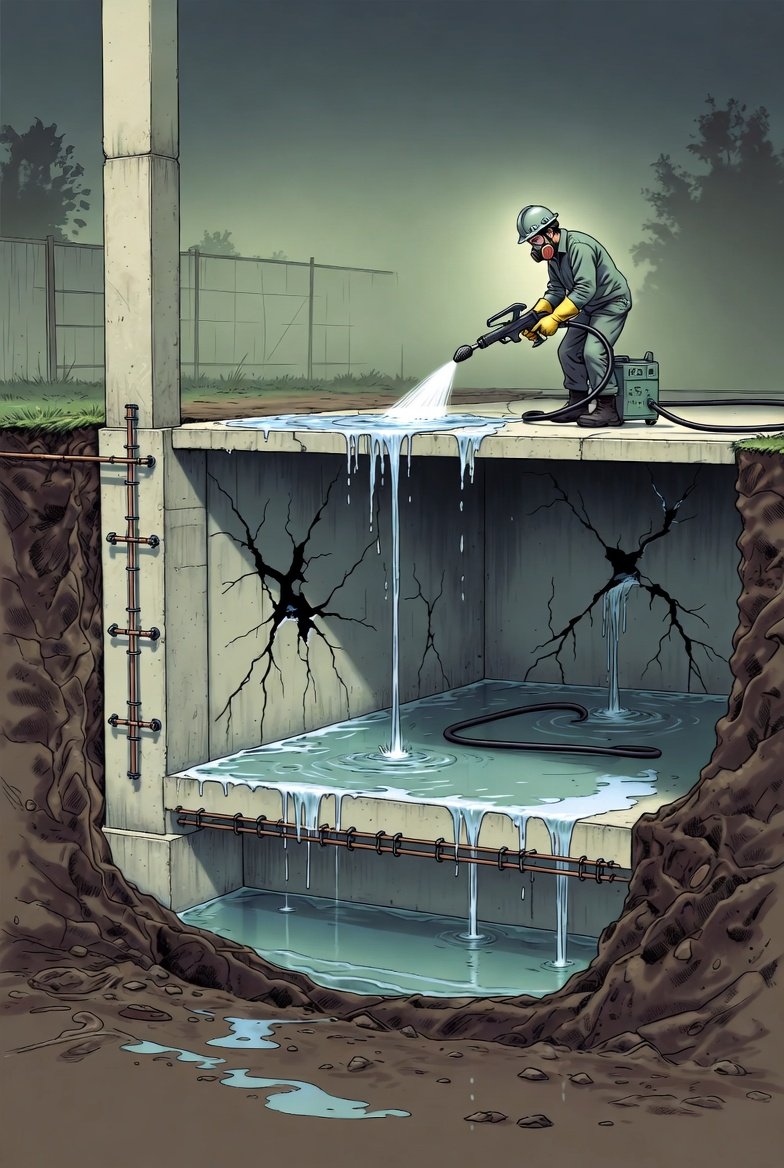
Exterior drainage systems exist to reduce hydrostatic pressure before water reaches the foundation.
How They Work
Installed at or near footing depth, these systems provide groundwater with a lower-resistance path away from the structure. This reduces pressure against foundation walls and supports other protective layers.
Where They Reach Their Limit
Exterior drainage requires full-depth access. Shallow or partial installations leave untreated pressure zones.
Sump Pump Systems
What Problem They Address
Sump pump systems exist to solve one issue: where does the collected water go?
How They Work
Sump systems actively remove water gathered by drainage systems and discharge it away from the foundation. Without this step, collection systems have no endpoint.
Where They Reach Their Limit
Sump pumps do not prevent water entry. They manage volume, not infiltration.
They are active components. Active components always introduce maintenance responsibility.
Wall Moisture Management Systems
What Problem They Address
Wall systems exist to manage unpredictable wall seepage and condensation, not groundwater pressure itself.
How They Work
Membranes or channels guide moisture down the wall into drainage systems, keeping water movement controlled and visible.
Where They Reach Their Limit
Wall systems do not stop water entry or relieve pressure. They organize moisture, not eliminate it.
Exterior Membrane and Coating Systems
What Problem They Address
These systems address direct moisture migration through foundation walls.
How They Work
Membranes and coatings create a continuous barrier on the exterior wall surface, preventing moisture from penetrating masonry.
Where They Reach Their Limit
Without exterior drainage, pressure can overwhelm membranes. They are protective layers, not pressure-relief systems.
Crack Injection and Localized Repair Systems
What Problem They Address
These systems target isolated entry points, not overall water behavior.
How They Work
Injection materials seal cracks or defects, blocking specific pathways.
Where They Reach Their Limit
They do not address pressure, saturation, or new entry points elsewhere.
Real-World System Stack Example
Most successful waterproofing projects are not single-system installs.
A common pressure-driven basement stack looks like:
Interior perimeter drainage → sump pump → wall membrane
Each layer serves a different function:
Drainage relieves pressure
Pump provides discharge
Wall membrane controls surface seepage
Remove one layer, and the system still works—but less predictably.
This layered logic is why systems are stacked, not duplicated.
Failure Case: When Systems Are Mismatched
A frequent failure pattern occurs when crack injection is used as a standalone solution in a pressure-driven basement.
The crack seals temporarily.
Pressure redistributes.
Water finds a new pathway.
The homeowner sees a new leak and assumes the system “failed.”
In reality, the system solved the wrong problem.
Waterproofing failures are often diagnosis failures, not product failures.
Decision Matrix: Matching System to Water Behavior
Water Behavior | Primary System Type |
Wall-floor joint seepage | Interior drainage |
Rising slab pressure | Interior drainage + sump |
Wall penetration mid-height | Exterior membrane |
Surface pooling outside | Exterior drainage |
Isolated crack entry | Crack injection |
Mixed patterns | Combined system stack |
This matrix is not a prescription. It shows why systems exist as responses, not upgrades.
Why Waterproofing Systems Are Combined
Basement water problems rarely have a single cause. That’s why systems are often combined.
Common combinations exist because:
Drainage manages pressure
Pumps provide discharge
Membranes protect surfaces
Wall systems organize seepage
Systems are stacked to address multiple stages of water movement, not to duplicate function.
What Waterproofing Systems Do Not Do
No system:
Eliminates groundwater
Changes soil composition
Fixes structural movement
Guarantees a completely dry environment
Systems manage risk and behavior—not nature.
Why the Same System Performs Differently Across Homes
Performance varies because:
Soil types hold water differently
Foundation depth changes pressure
Entry pathways differ
Discharge options vary
Systems respond to conditions; they do not override them.
System Longevity and Maintenance
Passive components such as drainage channels can last decades if installed correctly.
Active components require attention:
Sump pumps: typically 7–10 year lifespan
Backup pumps: periodic testing
Discharge lines: inspection after freezing seasons
Drainage paths: occasional verification
Waterproofing systems are not “install and forget.” They are infrastructure.
Infrastructure requires awareness.
How to Read System Descriptions Accurately
When evaluating any waterproofing system description, ask:
Where does water enter?
Where does pressure build?
Where does the system intervene?
What assumptions does it make?
Clear explanations focus on behavior, not promises.
Bottom Line
Basement waterproofing systems are problem-specific tools, not interchangeable upgrades. Each exists because a particular water failure pattern exists.
Understanding what each system controls—and where its role ends—allows you to evaluate solutions without relying on labels or sales framing.
For applied context, see how these systems are used in real-world scenarios in our basement waterproofing services overview.