
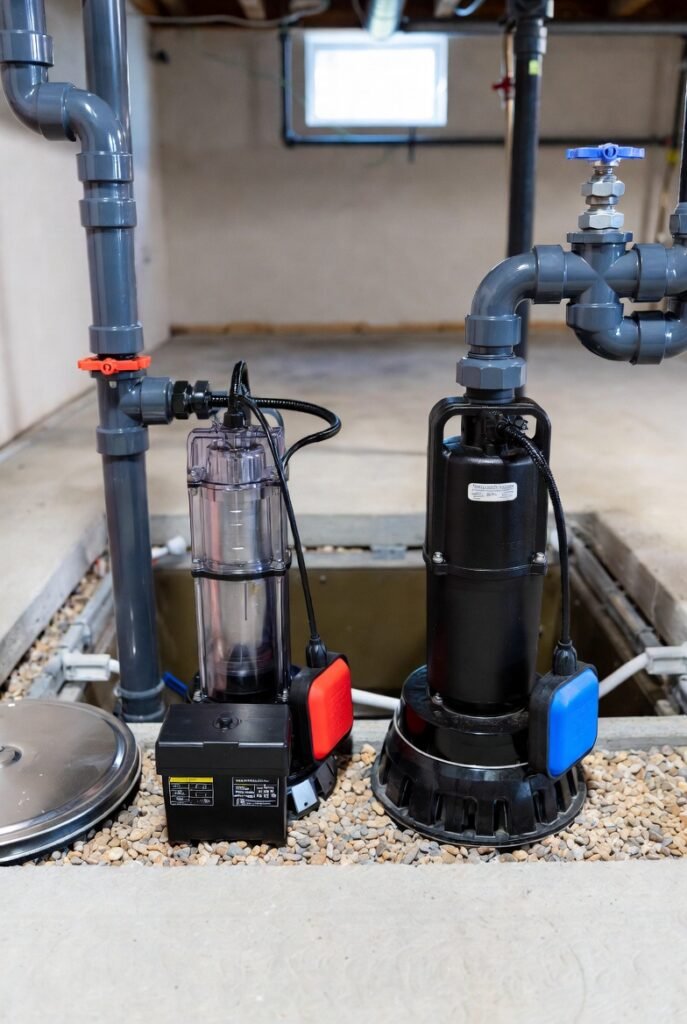
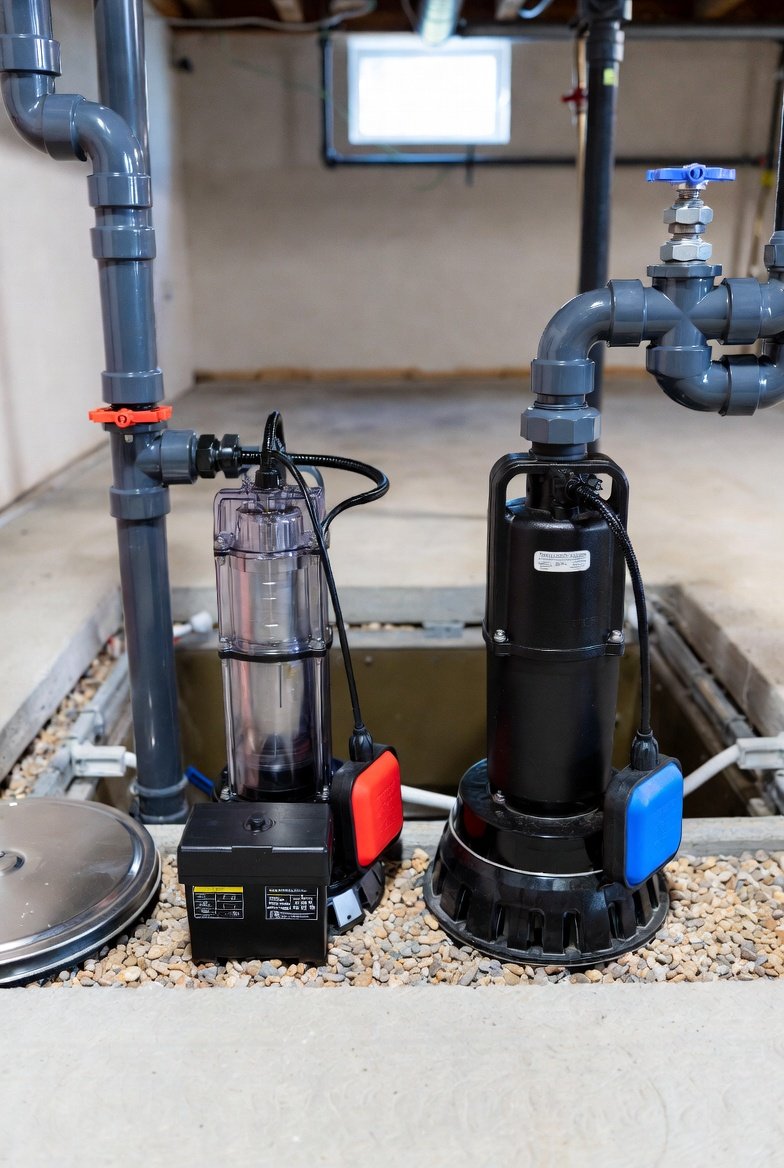
Backup Sump Pump Installation
The power usually fails during the same storm that overloads your sump pump.
That’s not a coincidence. That’s how basements flood.
A primary sump pump protects you during normal operation.
A backup sump pump protects you when everything else fails.
This guide walks through true failure planning — not just wiring instructions. You’ll learn:
- The 3 types of backup systems (and when each makes sense)
- How to install a secondary pump correctly in the same pit
- When tying into the same discharge is safe (and when it’s not)
- Water-powered backup realities
- Pit size constraints most homeowners ignore
- Testing and battery replacement cadence
If you haven’t installed your primary pump yet, start here first:
👉basement-sump-pump-installation
Backups only make sense if the main system is solid.
Why Backup Systems Exist (Failure Planning, Not Overkill)
Primary sump pump failures happen for predictable reasons:
- Power outage
- Float switch failure
- Motor burnout
- Clogged discharge
- Overload during extreme water event
A backup system exists to take over when the primary pump can’t operate.
It’s not optional in high-risk basements.
The 3 Types of Backup Sump Pump Systems
Understanding these properly prevents expensive mistakes.
1️⃣ Battery Backup Controller (Powers Primary Pump)
This system uses:
- A deep-cycle battery
- An inverter/controller
- Your existing primary pump
When power fails, the controller powers your main pump.
Pros
- Simple integration
- Uses existing discharge
- Lower install complexity
Cons
- If the primary pump itself fails mechanically, you still flood
- Battery runtime limits apply
Best for:
- Homes with newer primary pumps
- Moderate water load
- Short outage areas
2️⃣ True Secondary Battery Backup Pump (Redundant Pump in Pit)
This installs:
- A separate pump
- A separate float switch (set higher than primary)
- A battery + control system
When the primary pump fails or can’t keep up, the backup activates.
Critical Installation Rule
The backup float must be set higher than the primary float.
It activates only if the primary fails or water rises unusually high.
Pros
- Real redundancy
- Protects against mechanical failure
- Stronger flood protection
Cons
- Pit must be large enough
- More complex installation
Best for:
- High water table homes
- Finished basements
- Frequent heavy storms
3️⃣ Water-Powered Backup Pump (Municipal Water Driven)
This system:
- Connects to municipal water supply
- Uses water pressure to create suction (venturi effect)
- Pumps sump water out without electricity
Requirements
- Must have city water (not well-only systems)
- Adequate water pressure
Pros
- Unlimited runtime during power outage
- No battery maintenance
Cons
- Uses large volume of municipal water
- Not ideal in low-pressure areas
- Plumbing complexity
Best for:
- City homes with reliable water pressure
- Long outage regions
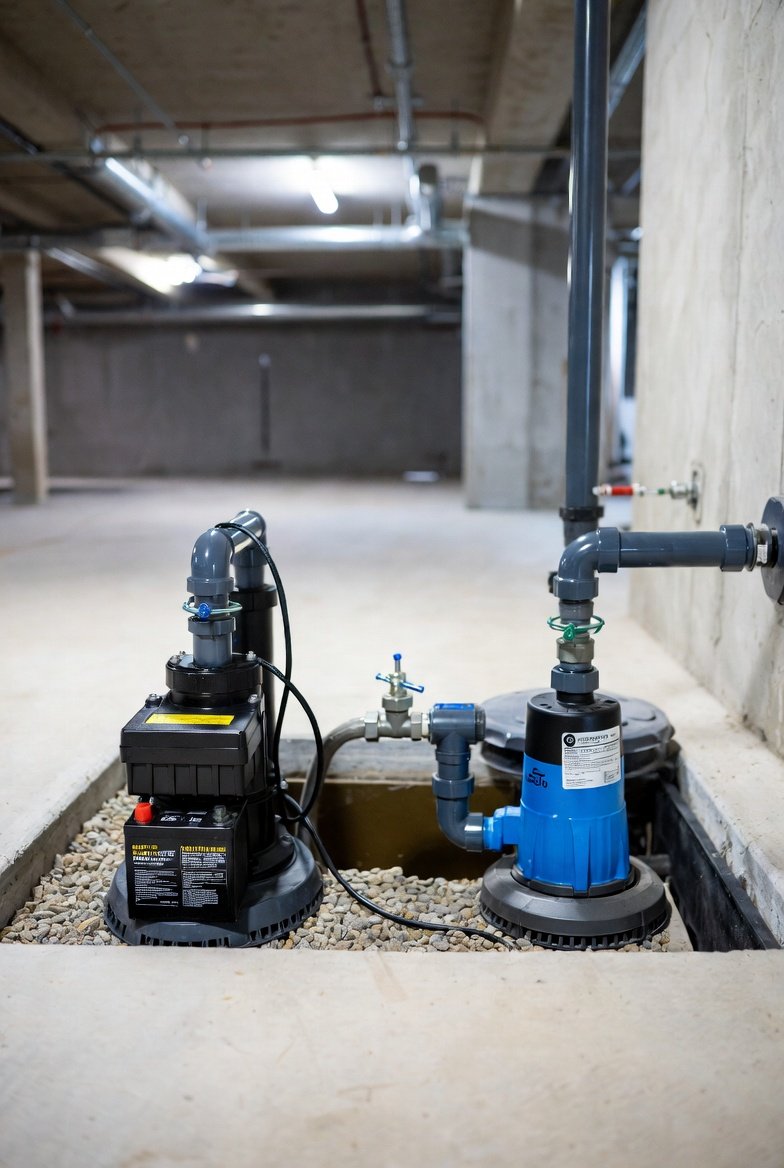
Backup System Decision Table
Your Situation | Best Backup Type |
Newer primary pump, rare outages | Battery controller |
High flood risk + finished basement | Secondary battery pump |
Long power outages + municipal water | Water-powered backup |
Frequent heavy water inflow | Secondary pump preferred |
Pit Size & Geometry (Most Overlooked Failure Point)
A secondary backup pump requires:
- Enough diameter to avoid float interference
- Enough depth so both pumps sit level
- Clearance so floats move freely
If your pit is too small:
- Floats can jam
- Pumps interfere
- System fails when needed
If the pit is undersized, upgrade the basin first.
Do not force two pumps into a small basin.
Discharge Line Strategy (Shared vs Separate)
You have two options:
Option A: Tie Backup into Existing Discharge
Common method.
Must include:
- Check valve for each pump
- Proper spacing
- Secure pipe support
Risk: If discharge line clogs or freezes, both pumps fail.
Option B: Separate Discharge Line
Higher reliability.
Each pump:
- Has its own check valve
- Has independent discharge path
Best for high-risk homes.
If you haven’t optimized your discharge routing yet, review:
👉 basement drainage system
Poor discharge design is a bigger flood risk than pump failure.
Battery Placement & Runtime Reality
Battery backup runtime depends on:
- Battery capacity (Ah rating)
- Pump horsepower
- Water inflow rate
Heavy storm + continuous pumping = shorter runtime.
Best Practices
- Keep battery in dry, ventilated area
- Use marine-grade deep cycle battery
- Test monthly
Replace battery every 3–5 years.
Testing Protocol (Failure Planning Discipline)
Quarterly test:
- Simulate power outage
- Confirm backup engages
- Observe discharge flow
- Listen for abnormal vibration
Also test after battery replacement.
Common Backup Installation Mistakes
- Float switches set at same height
- Battery left unmaintained
- Discharge tied in without proper check valves
- Pit too small for two pumps
- Water-powered backup installed on well system
Each one defeats redundancy.
When Backup Installation Is Non-Negotiable
You should strongly consider a backup system if:
- Basement is finished
- Home value is high
- Flood damage would exceed $10,000
- You’ve experienced previous sump failure
- You live in storm-prone region
For cost planning, see:
👉 sump pump installation cost
👉basement-flood-cleanup-cost
Prevention is cheaper than restoration.
Final Verdict
Backup sump pump installation isn’t about paranoia.
It’s about eliminating single points of failure.
Primary pump = normal protection.
Backup pump = disaster insurance.
Done correctly, you sleep through storms.
Done casually, you find out during the worst possible night.