
Basement Sump Pump Installation: How Basement Conditions Shape the Setup
Introduction
Basement sump pump installation is often described as a single task.
In reality, it is a basement-specific response to how water behaves below grade—shaped by slab depth, soil conditions, drainage paths, and the way basements accumulate pressure.
A sump pump does not change where water comes from.
It changes what happens after water concentrates at the lowest point beneath the basement floor.
That concentration behaves differently in basements than in crawl spaces, garages, or daylight foundations. This is why basement sump pump installation follows its own logic.
This guide explains:
- How basement conditions influence sump pump placement
- How water reaches the sump in a basement environment
- When basement installation works well
- Where its responsibility ends
What “Basement Sump Pump Installation” Refers To
Basement sump pump installation refers to installing a sump collection point and pump system within a basement slab environment, where water accumulates below finished or unfinished floor level.
In a basement context, installation is shaped by:
- Slab elevation relative to groundwater
- Interior drainage paths (if present)
- Basement depth below grade
- Concrete thickness and reinforcement
- Discharge constraints above grade
Unlike general sump pump discussions, basement installation focuses on below-slab water behavior, not surface entry or wall penetration.
Why Basements Require a Different Sump Setup
Basements sit entirely below surrounding ground level. This changes water behavior in several important ways:
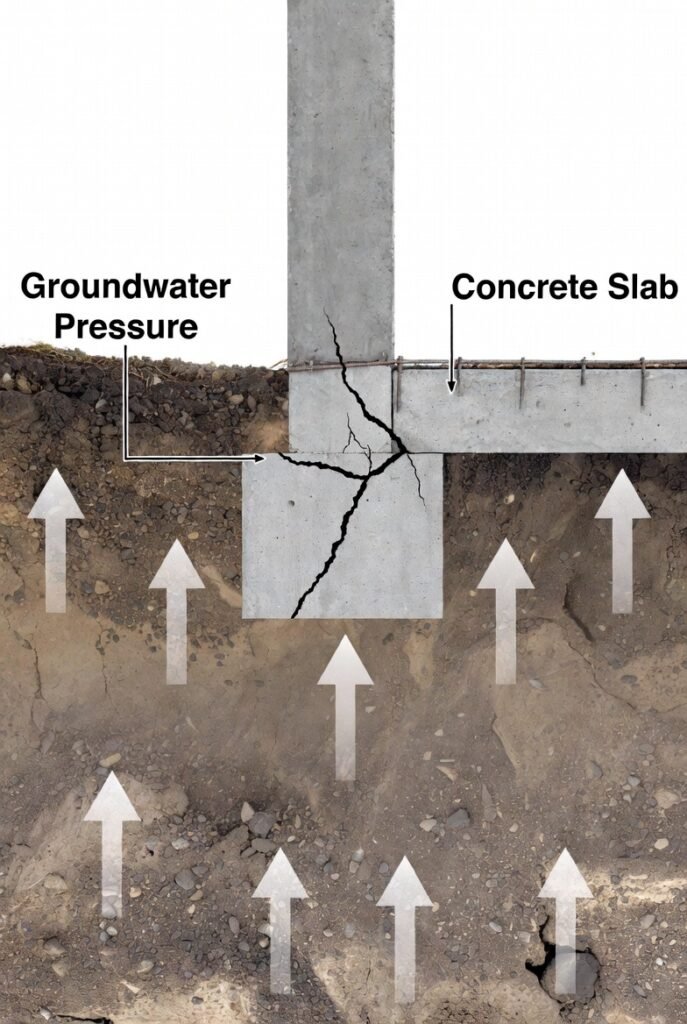
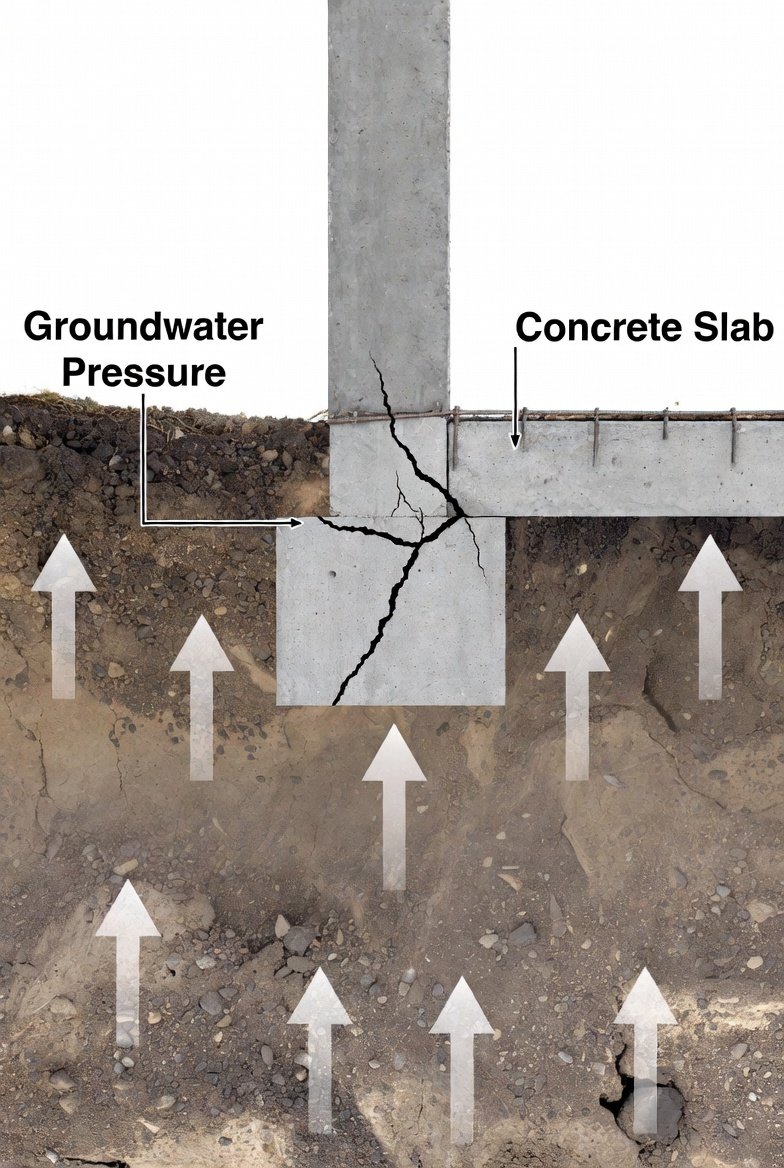
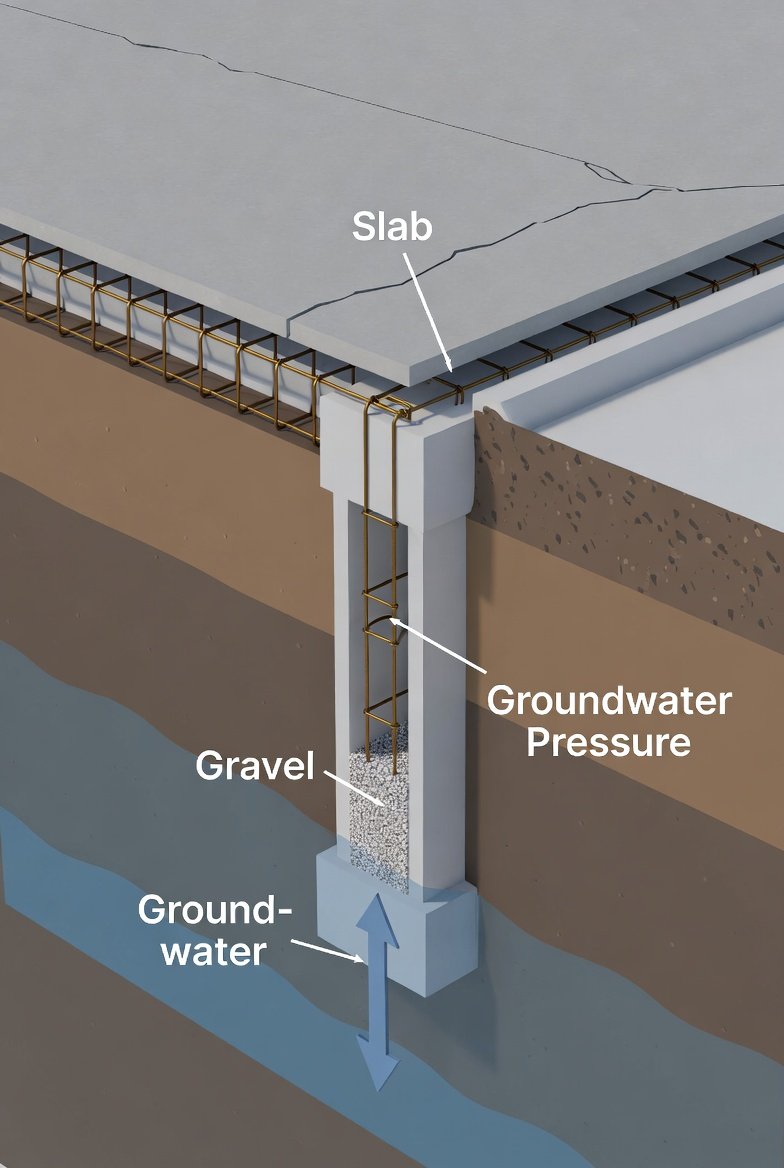
- Groundwater pressure acts upward against the slab
- Water collects beneath the floor before reaching walls
- Release points form at slab edges or low points
- Gravity favors accumulation rather than lateral escape
In basements, sump pumps most often manage groundwater pressure beneath the slab, not surface water entering from above.
Because of this, basement sump pump installation is not about intercepting water at entry points.
It is about managing accumulation beneath the slab once pressure finds relief.
Where Water Reaches the Sump in a Basement
In basements, water typically reaches the sump through one of three paths:
1️⃣ Subsurface Movement Beneath the Slab
Groundwater migrates upward and laterally until it reaches a low point.
2️⃣ Interior Drainage Routing
Perimeter or under-slab drainage systems guide water toward the sump pit.
3️⃣ Natural Pressure-Release Zones
Water concentrates where hydrostatic pressure equalizes.
The sump pit becomes a deliberate pressure-relief basin, accepting water that would otherwise spread across the basement floor.
Basement Sump Pit Placement Logic
In a basement, sump pit placement is governed by water convergence, not convenience.
Key placement principles include:
- Locating the pit at the lowest effective elevation
- Aligning with interior drainage paths (if present)
- Avoiding isolated placement outside pressure flow
- Ensuring adequate depth below slab level
Incorrect placement does not stop water entry—it simply allows water to accumulate elsewhere.
How Basement Conditions Affect Installation Complexity
Basement sump pump installation varies in complexity based on structural conditions.
Slab Thickness and Reinforcement
Thicker or reinforced slabs require:
- More cutting time
- Heavier equipment
- Greater restoration effort
- Interior drainage system
This affects installation scope, not sump function.
Finished vs Unfinished Basements
Finished basements introduce constraints such as:
- Flooring removal and replacement
- Dust containment
- Limited access to optimal pit locations
These factors influence where a sump can be placed, not whether it will work.
Basement Depth Below Grade
Deeper basements experience:
- Higher groundwater interaction
- Longer water travel paths
- Greater reliance on mechanical removal
As depth increases, the sump becomes more critical as a pressure outlet.
How Basement Sump Pumps Interact With Drainage
In basements, sump pumps rarely operate alone.
- Interior drainage systems route water to the sump
- The sump pump provides the mechanical exit
- Without drainage, the sump relies on natural accumulation
The sump pump is the endpoint of controlled interior water movement.
What Basement Sump Pump Installation Does Well
Basement sump pump installation performs well when:
- Water accumulates beneath the slab
- Interior drainage directs water inward
- Flooding correlates with groundwater rise
- The basement french drainage stays dry between pressure events
In these conditions, the sump provides predictable and repeatable control.
What Basement Sump Pump Installation Does Not Do
Basement sump pumps have clear boundaries.
They do not:
- Stop water from entering foundation walls
- Prevent surface runoff issues
- Seal cracks or penetrations
- Correct exterior grading
- Address structural movement
They manage accumulation, not entry.
Why Basement Sump Systems Sometimes Underperform
When basement sump pumps fail to meet expectations, the issue is usually not the pump itself.
Common causes include:
- Water entering from wall penetrations
- Drainage paths bypassing the pit
- Pit placement outside pressure flow
- Discharge limitations above grade
In these cases, water behavior is normal—the system alignment is not.
Basement Discharge Constraints
Basements introduce unique discharge challenges:
- Water must be lifted vertically to reach grade
- Longer vertical lift increases system dependency
- Poor discharge placement allows water to return
Unlike shallow foundations, basement sump pumps must overcome vertical lift, which directly shapes system reliability.
When Basement Sump Pump Installation Is Secondary
In basement systems, sump pump installation usually follows drainage definition, not the other way around.
It should be secondary when:
- Water enters primarily through foundation walls
- Surface runoff reaches basement openings
- Exterior drainage issues dominate
- Structural cracks are the main release point
In these scenarios, a sump may reduce damage—but will not resolve the water path.
Bottom Line
What Basement Sump Pump Installation Really Is
Basement sump pump installation is a basement-specific pressure-relief strategy.
It:
- Does not prevent water from arriving
- Does not waterproof a basement
- Does not correct exterior water sources
It provides a controlled exit for water that inevitably concentrates beneath a basement slab.
Used in the right context, it is effective and predictable.
Used as a catch-all solution, it is often misunderstood.