
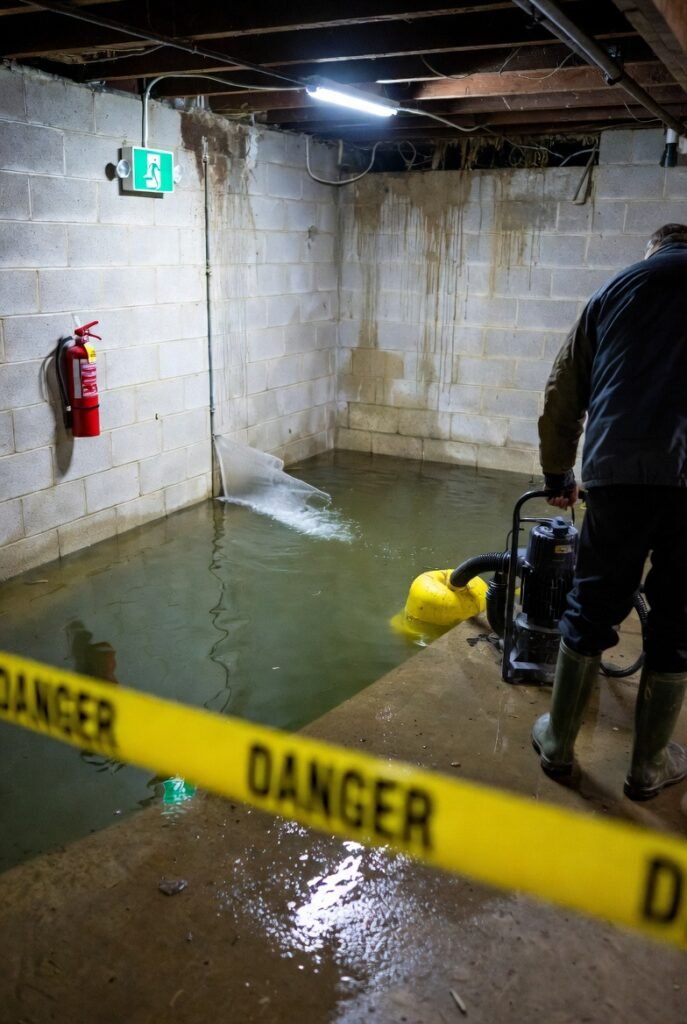
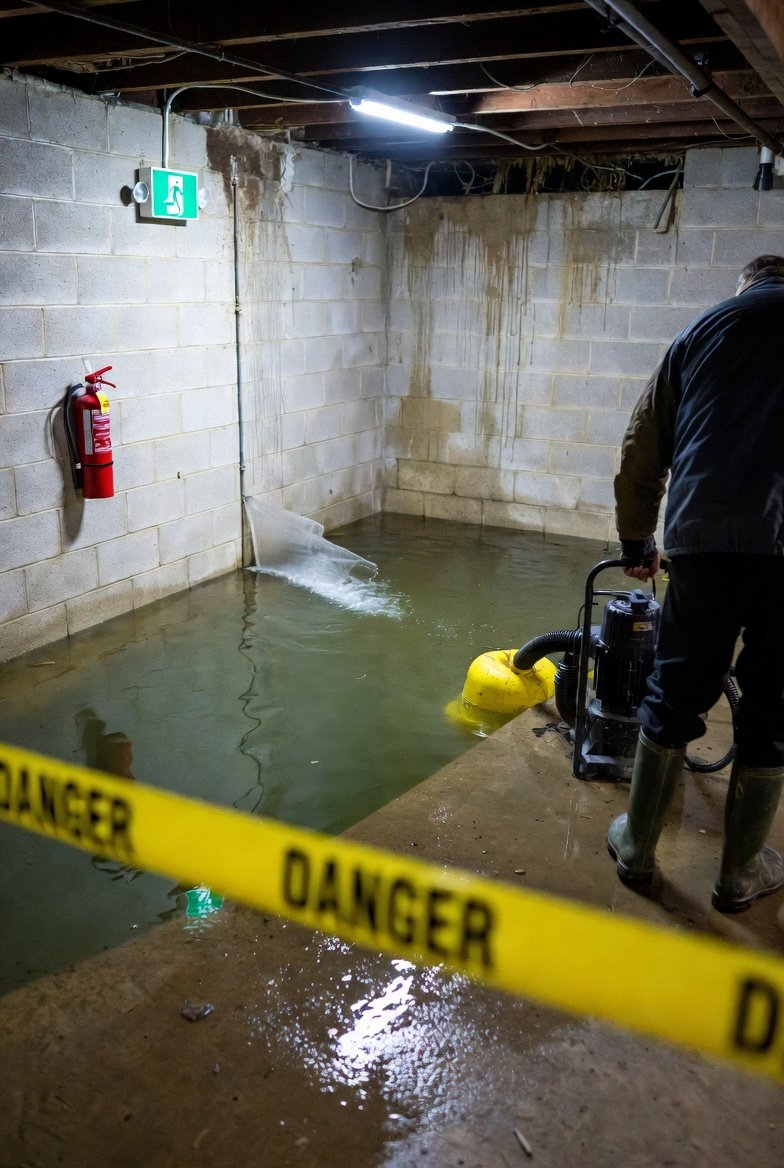
Water Coming Through Basement Floor — This Is a Pressure Failure
Concrete does not randomly start leaking.
It yields when pressure beneath it exceeds resistance.
If water is rising through your basement floor, the crack you see is rarely the root cause. The real issue is typically hydrostatic pressure building beneath the slab, forcing groundwater upward until it finds a relief point.
This is groundwater physics — not cosmetic water intrusion.
When soil becomes saturated and the water table rises, hydraulic uplift pushes vertically against the slab. When upward force exceeds the slab’s tensile capacity, the floor becomes a pressure release point.
Most often, that release occurs at the cove joint — the wall-to-floor seam.
What This Page Solves
This guide helps you understand:
- Why basement floor water seepage occurs after prolonged rain
- How slab uplift stress develops
- What sub-slab hydrostatic pressure actually means
- Why seasonal seepage recurrence happens
- Which drainage systems relieve pressure correctly
This guide does not address:
- Plumbing line leaks
- Window well overflow
- Surface splashback during active rainfall
For full system context, review the drainage control framework:
Floor seepage is almost always part of a larger pressure management issue.
How Hydrostatic Pressure Builds Beneath a Slab
When soil saturates over several days:
- Soil voids fill with water
- Groundwater rises beneath the foundation
- Vertical pressure increases against slab underside
- Concrete experiences tensile stress
- Water escapes at the weakest structural point
Concrete performs well in compression.
It performs poorly in tension.
Hydraulic uplift creates upward tensile stress.
Concrete does not leak — it yields under pressure.
Soil Type Matters
Clay Soil
- Drains slowly
- Holds water longer
- Increases pressure duration
- Raises slab uplift risk
Sandy Soil
- Drains quickly
- Pressure spikes faster
- May relieve faster
- Less persistent uplift load
Clay-heavy regions experience higher recurrence of basement floor water seepage.
Primary Failure Points
Location | Why It Fails | Pressure Direction |
Cove Joint | Natural construction seam | Lateral + Vertical |
Slab Crack | Tensile weakness | Vertical uplift |
Pipe Penetration | Seal vulnerability | Concentrated uplift |
Cold Joint | Construction transition | Differential seepage |
The cove joint is the most common hydrostatic relief path.
Repair reference:
joint repair
Hydrostatic vs Surface Intrusion
Understanding the difference prevents misdiagnosis.
Hydrostatic Intrusion
- Appears after prolonged rainfall
- Emerges at slab seam
- Recurs seasonally
- Often linked to clay soil
Surface Intrusion
- Occurs immediately during rain
- Visible above slab
- Linked to downspouts or poor grading
Choosing the wrong category leads to the wrong repair.
Interior vs Exterior Drainage — What Actually Relieves Pressure
System | Relieves Sub-Slab Pressure | Excavation Required | Typical Cost |
Interior Perimeter Drain + Sump | ✔ Yes | No | $4,000–$12,000 |
Exterior Footing Drain | ✔ Yes | Yes | $10,000–$25,000+ |
Interior systems directly relieve sub-slab hydrostatic pressure.
Exterior systems intercept groundwater before it loads the foundation.
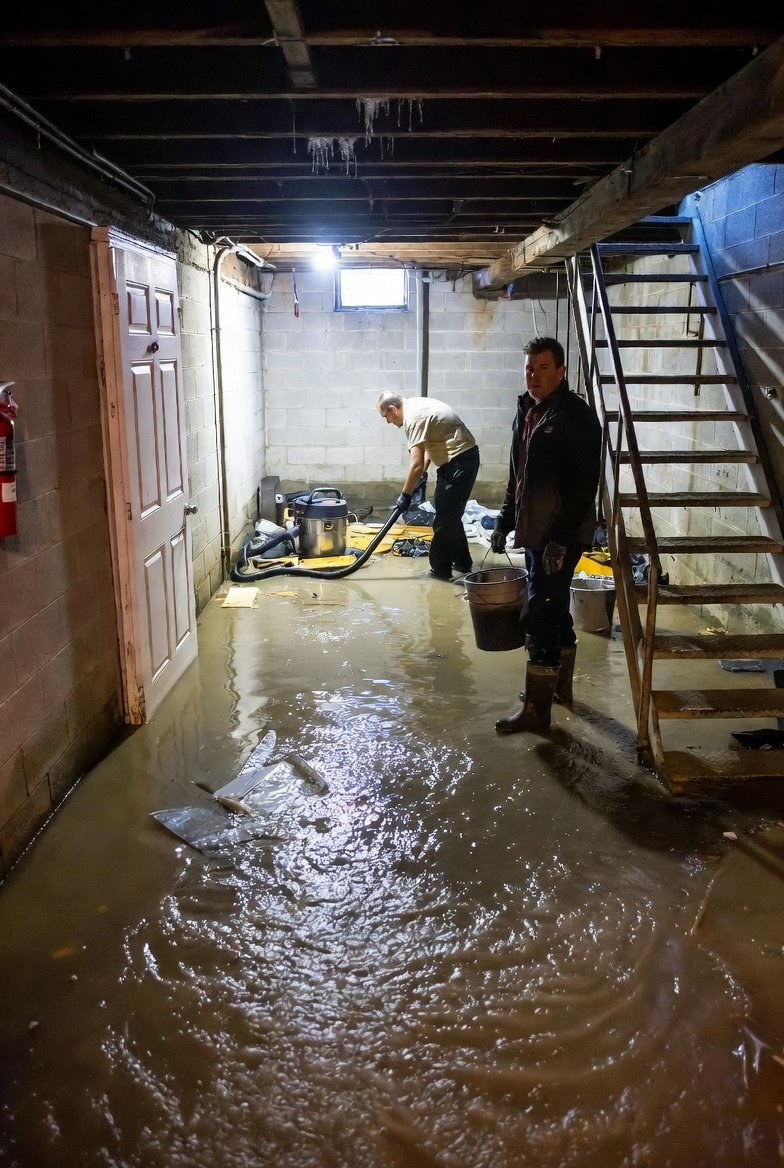
Cost driver analysis:
When Interior Drainage Is Appropriate
Interior drainage is typically appropriate when:
- The lot is flat
- Groundwater rises seasonally
- Clay soil retains moisture
- Structural walls are stable
Sump installation guide:
basement-sump-pump-installation
Critical Structural Rule
Do NOT rely on crack injection alone if hydrostatic pressure remains active.
Sealing a crack does not relieve groundwater load.
Water will simply find another pressure relief point.
Layered Protection Model
Single-layer approach:
- Crack injection only
- No sump redundancy
- No grading correction
Result: seasonal recurrence.
Layered protection:
- Interior perimeter drain
- Sump pump
- Battery backup
- Freeze-protected discharge
- Corrected grading
Battery backup guidance:
battery-backup-sump-pump-installation
Layering reduces single-point failure risk during storms.
Common Drainage System Failure Modes
Drainage systems fail when:
- Discharge lines freeze
- Sediment clogs drain tile
- Pumps burn out
- Backup batteries are not maintained
- Discharge slope is inadequate
Hydrostatic systems require seasonal readiness.
Maintenance Schedule
Quarterly:
- Test sump pump operation
Annually:
- Clean basin
- Inspect discharge line
Pre-winter:
- Confirm freeze protection
Post-storm:
- Inspect grading and outlet flow
Groundwater pressure is seasonal.
Maintenance must be proactive.
Mini Case Example
A homeowner in clay soil experienced recurring basement floor water seepage every spring.
Two crack injections temporarily reduced visible moisture.
After installing interior perimeter drainage with sump and battery backup, seepage stopped across multiple seasons.
The crack was never the root cause.
Hydraulic uplift was.
Frequently Asked Questions
How do I know if water through my floor is hydrostatic pressure?
If seepage appears after prolonged rain and originates at slab seams or cracks, hydrostatic pressure is likely.
Can exterior grading alone prevent this?
No. Grading reduces surface runoff but does not prevent groundwater from rising beneath the slab.
Can waterproof coatings fix the issue?
No. Coatings resist moisture but do not relieve hydrostatic pressure beneath the slab.
How quickly can sub-slab pressure build?
Often within 24–72 hours of sustained rainfall, depending on soil type and groundwater conditions.
Is crack injection ever enough?
Only if hydrostatic pressure has been relieved and groundwater load is controlled.
Which soil increases slab uplift risk?
Clay soils retain water longer, increasing both vertical and lateral pressure duration.
Can battery backup prevent all failures?
It reduces single-point failure risk but does not replace proper layered drainage design.
Can landscaping changes affect slab uplift?
Yes. Improper grading or added hardscape can trap water near the foundation.
Preventing Sub-Slab Hydrostatic Pressure
To reduce recurrence:
- Relieve groundwater pressure
- Maintain proper discharge slope
- Ensure pump redundancy
- Avoid sealing symptoms without pressure control
Explore complete solutions:
basement drainage system
Final Structural Clarity
Water coming through your basement floor is predictable.
The slab is the release point.
The soil is the pressure source.
Drainage is the control mechanism.
Concrete does not leak.
It yields under hydrostatic force.
dark web market links dark web sites
darknet market lists dark market url