
Basement French Drain: What It Is, How It Works, and Where Its Limits Are
Introduction
Every spring, many basements show the same early warning sign:
moisture along the wall-to-floor seam — not the middle of the floor.
Most homeowners call this a leak.
In reality, it’s usually pressure-driven seepage — and a basement French drain is engineered for exactly that condition.
Contrary to common belief, a basement French drain is not a waterproofing solution.
It is a pressure-relief system, designed to manage where water goes after it reaches the foundation.
When that role is misunderstood, expectations drift — and even properly designed systems get blamed for problems they were never meant to solve.
This guide explains:
- What a basement French drain actually is
- How it works beneath the slab
- Where its responsibility clearly ends
Understanding What a Basement French Drain Actually Does
In basement contexts, the term French drain almost always refers to an interior perimeter drain installed along the slab edge.
It does not usually mean an exterior trench in the yard.
In simple terms, a basement French drain:
- Collects water at the wall-to-floor joint
- Relieves basement water pressure
- Routes seepage toward a controlled discharge point
Because the same term is used for multiple drainage concepts, confusion is common.
In basements, a French drain is best understood as a slab-edge collection system, not a barrier and not a seal.
What a Basement French Drain Is
(Structural Definition)
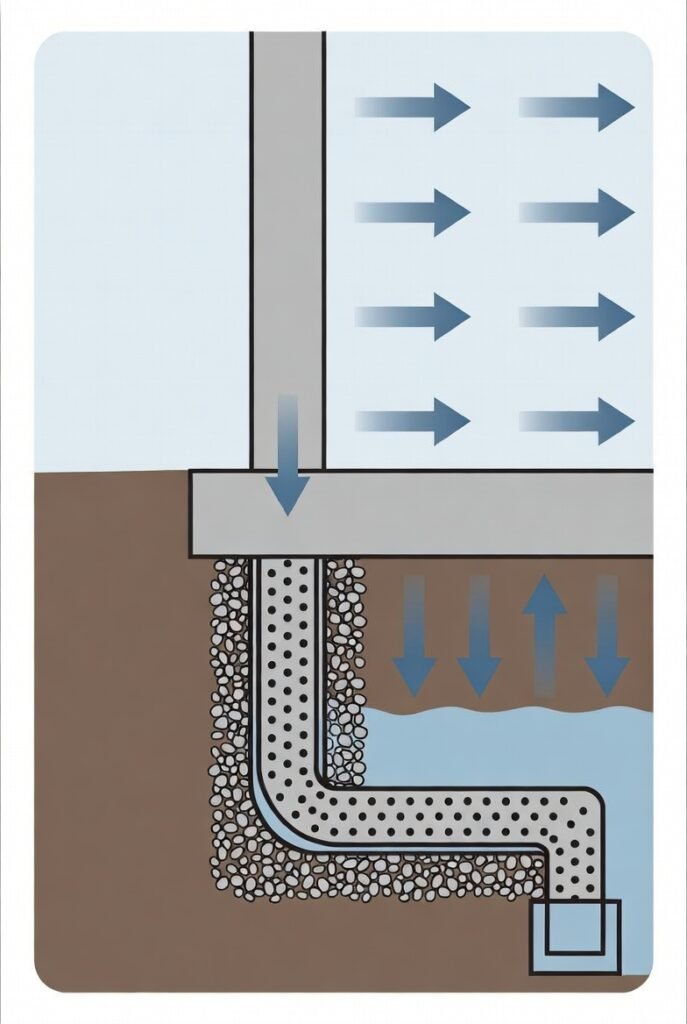
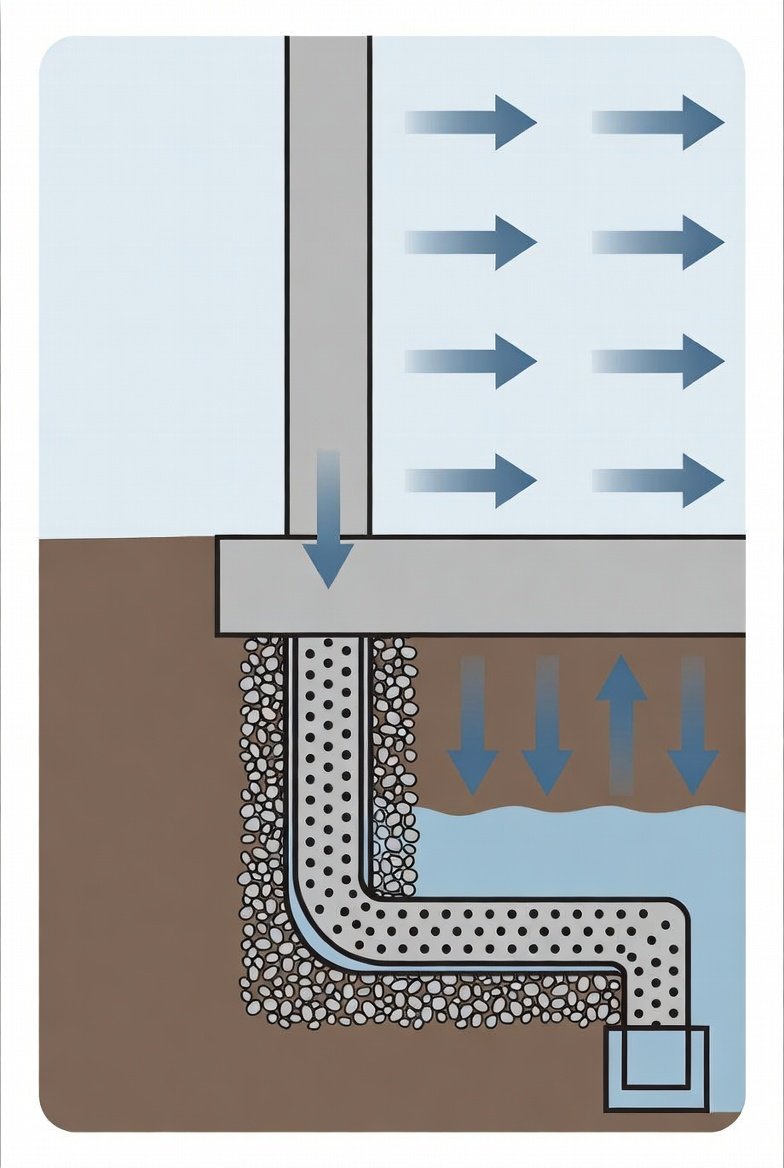
A basement French drain is a subsurface drainage channel installed inside the basement, typically where the foundation wall meets the floor slab.
A standard system includes:
- A narrow trench cut into the concrete floor along the perimeter
- Drainage stone placed below slab level
- A perforated pipe or formed drain channel
- A connection to a sump basin or gravity outlet
- A sealed wall-floor interface that allows water to enter the drain
A basement French drain does not stop water from reaching the foundation.
It manages how water is collected and removed once hydrostatic pressure builds.
Each component exists to give water a lower-resistance path than your basement floor.
Why Basement Water Always Appears at the Wall-to-Floor Seam
Basements tend to leak in the same place for the same reason.
The wall-to-floor joint is:
- Where foundation walls terminate
- Where floor slabs begin
- Where soil-driven pressure concentrates
When surrounding soil becomes saturated, basement water pressure seeks the weakest internal boundary.
That boundary is usually the slab edge.
A basement French drain is positioned exactly at this pressure hotspot, capturing water before it spreads across the floor.
How a Basement French Drain Works Beneath the Slab
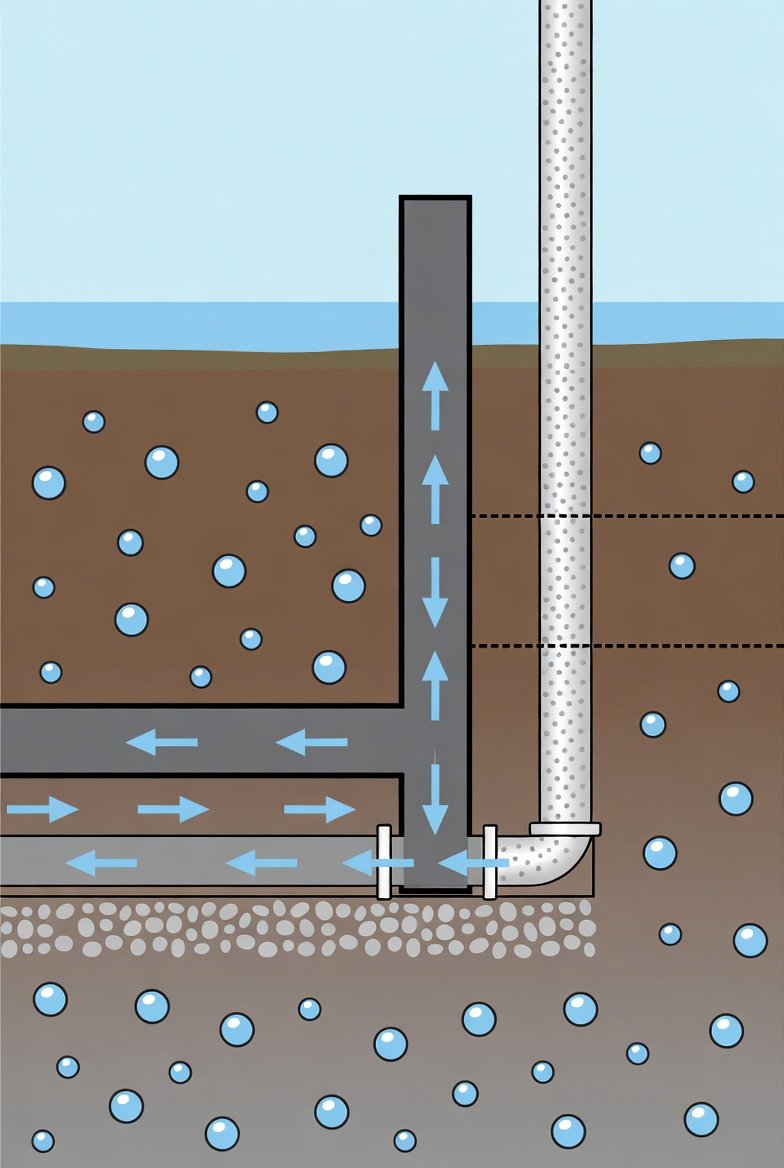
The system operates on predictable mechanics:
- Water accumulates around or beneath the foundation
Rain, snowmelt, clay soils, or high seasonal water tables increase pressure. - Pressure migrates toward the slab edge
Water seeks the lowest interior release point. - The drain provides a controlled entry path
Instead of surfacing across the floor, water enters the drain channel. - Collected water flows toward a sump basin
The interior perimeter drain slopes gently toward discharge. - Water is removed from the basement zone
A sump pump or gravity outlet carries it away.
Functionally, a basement French drain behaves like a pressure-relief channel built into the slab edge, redirecting inevitable seepage in a controlled way.
What a Basement French Drain Does Well
A basement French drain is most effective when the problem is pressure-driven seepage, not surface intrusion or structural failure.
It commonly aligns with:
- Water appearing after heavy or prolonged rain
- Dampness concentrated along basement edges
- Seepage returning to the same locations
- Basements that leak intermittently, not constantly
Because it’s installed from the inside, it:
- Avoids exterior excavation
- Works where outside access is limited
What a Basement French Drain Cannot Fix
A French drain is not a universal solution. Its limits are structural.
It does not:
- Prevent water from contacting foundation walls
- Repair cracks or foundation movement
- Stop water entering above slab level
- Correct grading or downspout failures
- Eliminate condensation or humidity
- Address plumbing leaks or sewer backups
It manages where water exits, not why water exists.
Interior French Drain vs Exterior Drainage Systems
Interior and exterior drainage systems address different points in the water path.
- Exterior drainage reduces how much water reaches the foundation
- Interior French drains manage water after it arrives at the slab edge
As explained in our Interior Drainage System guide, interior systems accept that pressure exists and focus on controlled release, not exclusion.
They are not interchangeable by default.
Why Basement French Drains Are Sometimes Blamed for Failure
Most complaints fall into three predictable categories:
- Discharge path failure
Frozen, blocked, or poorly routed outlets - Entry mismatch
Water enters above the drain line - Multiple moisture sources
Seepage is controlled, but humidity remains
In these cases, the drain is often functioning correctly — but the problem definition is incomplete.
Quick Diagnostic Table
Is a French Drain the Right Tool?
Symptom | Likely Cause | French Drain Role |
Water at wall-to-floor seam | Under-slab pressure | Captures & routes |
Damp mid-wall | Crack or penetration | Outside scope |
Wet floor during dry weather | Plumbing or condensation | Outside scope |
Leaks only after storms | Hydrostatic pressure | Strong fit |
Maintenance Reality
(Often Overlooked)
A basement French drain is passive — until it isn’t.
Responsible ownership includes:
- Testing the sump pump before wet seasons
- Keeping the basin clear of debris
- Ensuring the discharge path remains open and unfrozen
- Watching for changes in seepage patterns
A drain is only as dependable as its discharge route.
When a French Drain Is Secondary
A basement French drain should not be the primary response if there is:
- Foundation wall movement
- Progressive structural cracking
- Window-well overflow
- Confirmed plumbing failure
Drainage may still matter — but only after the dominant issue is addressed.
Bottom Line
What a Basement French Drain Really Is
A basement French drain is pressure-management infrastructure.
It:
- Does not waterproof a basement
- Does not repair structures
- Does not eliminate moisture entirely
It redirects seepage at the point where water seeks release.
Used within that boundary, it is predictable and effective.