
Basement Wall Cracks — Structural Diagnosis Starts With Load Path, Not the Crack
A basement wall does not crack because concrete is weak.
It cracks because lateral soil pressure and hydrostatic pressure exceed its bending capacity.
The visible fracture is the release point.
The real issue is force accumulation behind the wall.
Structural diagnosis answers seven questions:
- What load is acting on the wall?
- Where is the tensile zone forming?
- What crack pattern does that load produce?
- Is the wall moving?
- Is pressure still active?
- Is reinforcement necessary?
- Or is monitoring sufficient?
Cracks are signals.
Load is the cause.
Table of Contents
- How Basement Walls Fail
- Crack Types and Structural Meaning
- Wall Bowing Thresholds
- Soil Pressure & Hydrostatic Load
- Crack Risk Decision Matrix
- Structural Reinforcement Options
- Monitoring & Maintenance Protocol
- When to Call a Structural Engineer
- FAQs
1. How Basement Walls Fail
Basement walls function like short retaining walls.
They resist:
- Lateral soil pressure
- Hydrostatic pressure from saturated soil
- Expansive clay swelling
- Freeze–thaw soil movement
Failure Sequence
- Soil saturates
- Soil mass increases
- Lateral force rises
- Wall bends inward
- Interior face enters tension
- Crack forms along tensile zone
Concrete is strong in compression but weak in tension.
Mid-wall is typically the highest bending moment location.
That is why horizontal cracks often form at mid-height.
If cracking is accompanied by water seepage, review related pressure behavior here:
water-coming-through-basement-floor
2. Crack Types and Structural Meaning
Vertical Cracks
Common causes:
- Concrete shrinkage
- Minor settlement
- Temperature stress
Risk: Low to Moderate
Monitor unless:
- Crack widens seasonally
- Displacement appears
- Seepage persists
Horizontal Cracks
Usually caused by:
- Hydrostatic pressure
- Saturated clay soil expansion
- Excess lateral load
Risk: High
A horizontal crack indicates bending stress overload.
It is structural until proven otherwise.
Stair-Step Cracks (CMU Block Walls)
Failure occurs at mortar joints first.
Cause:
- Uneven soil pressure
- Expansive clay
- Settlement
Block walls fail along joints before concrete mass fails.
Diagonal Cracks
Often linked to:
- Corner settlement
- Differential foundation movement
Severity depends on displacement and progression.
Visual Aid Guide (For Page Graphics)
Include diagrams showing:
- Lateral soil pressure arrows against wall
- Mid-span tension zone
- Crack pattern comparison
- Wall bowing deflection measurement
These visuals clarify failure logic.
3. Wall Bowing Thresholds
Cracks matter.
Bowing matters more.
Inward Bow | Risk Level | Action |
< 1 inch | Low | Monitor + drainage review |
1–2 inches | Moderate | Structural inspection |
> 2 inches | High | Reinforcement likely |
Progressive movement | Severe | Immediate evaluation |
Bowing indicates active bending stress.
4. Soil Pressure & Hydrostatic Load
Soil type directly affects wall stress duration.
Soil Type | Drainage Speed | Pressure Duration | Structural Risk |
Clay | Slow | Long-lasting | High |
Loam | Moderate | Moderate | Medium |
Sand | Fast | Short-term | Variable |
Clay retains water and expands.
When saturated:
- Soil weight increases
- Lateral load increases
- Pressure persists longer
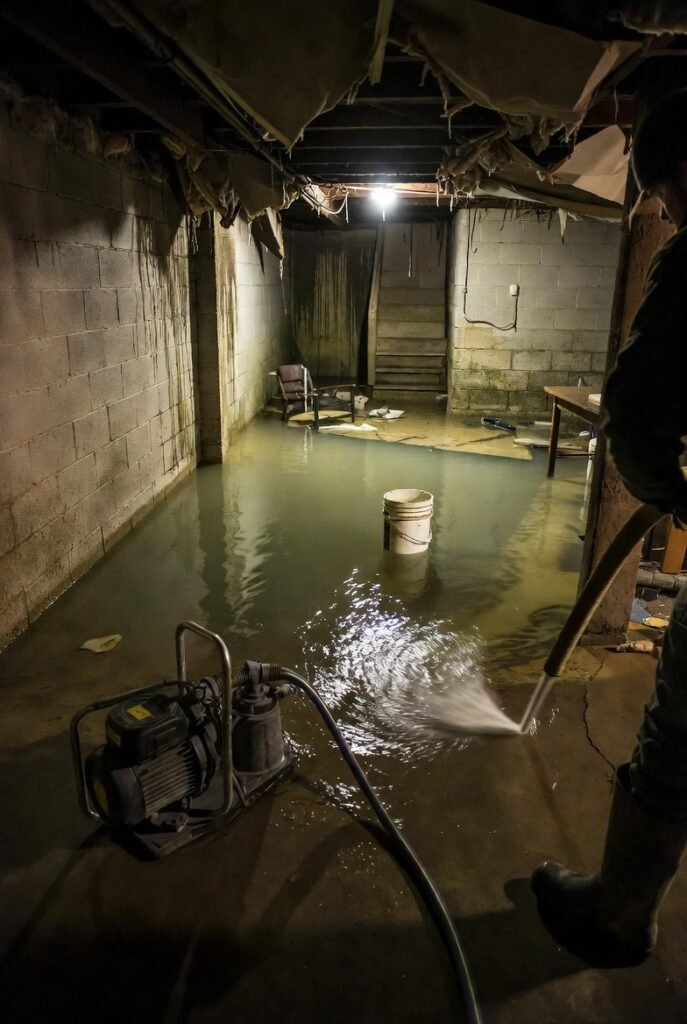
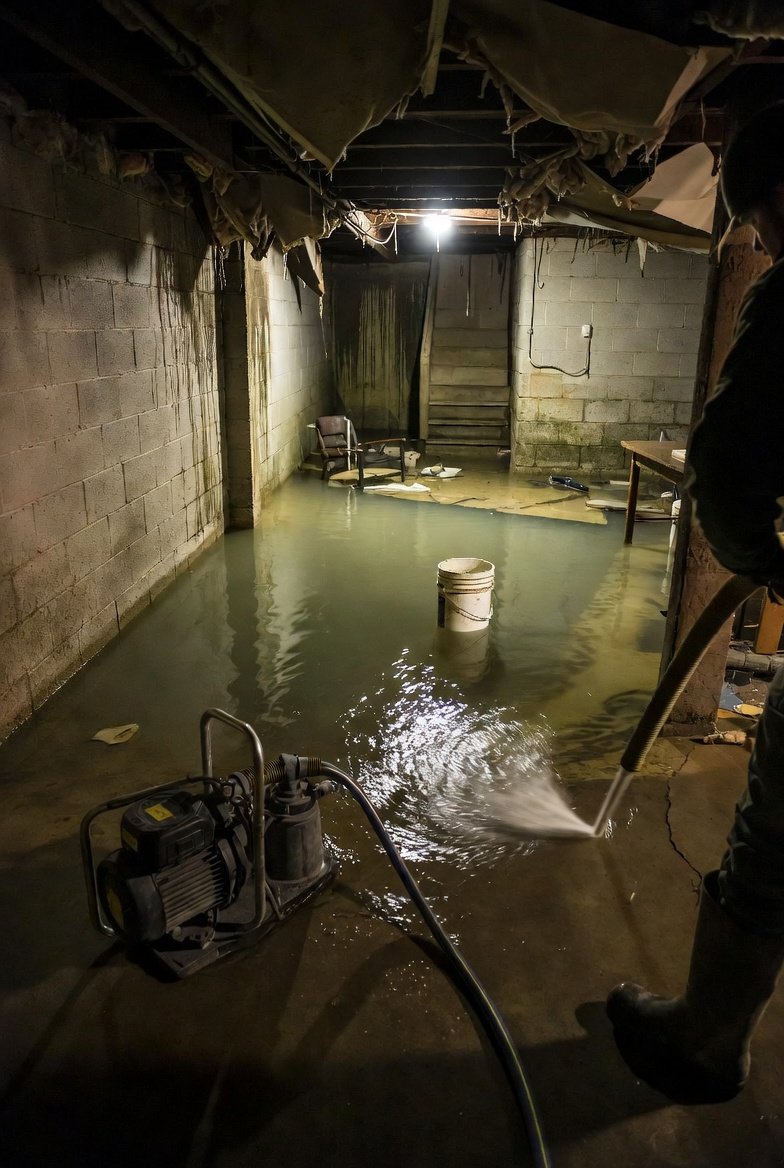
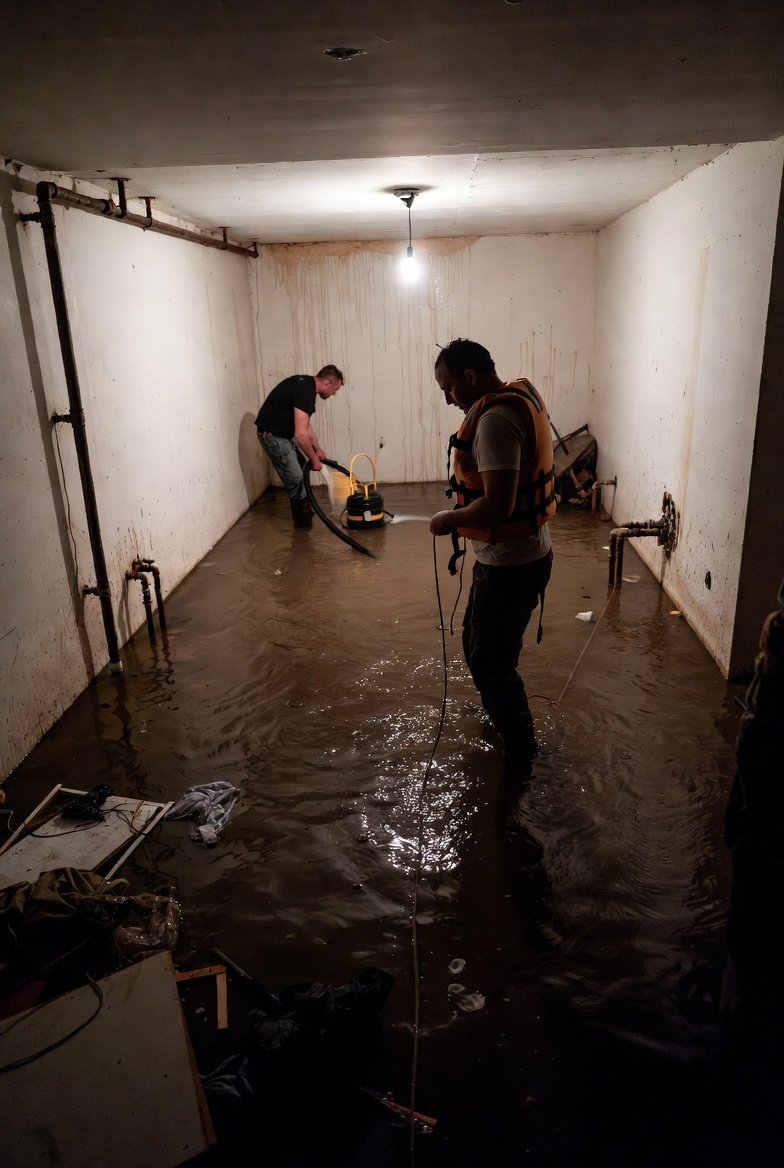
Drainage reduces hydrostatic pressure load:
Pressure vs Wall Type vs Risk
Wall Type | Soil Condition | Pressure Effect | Failure Risk |
Poured Concrete | Clay | Mid-span horizontal crack | Moderate–High |
CMU Block | Clay | Stair-step shear cracking | High |
Thin Pre-1980 Wall | Saturated | Bowing + displacement | High |
Reinforced Modern | Sandy | Minor shrinkage cracking | Low |
5. Crack Risk Decision Matrix
Pattern | Width | Movement | Soil | Risk | Action |
Vertical | <1/16″ | None | Any | Low | Monitor |
Vertical | >1/8″ | Minor | Clay | Moderate | Drainage check |
Horizontal | Any | None | Clay | High | Structural review |
Horizontal | Widening | Visible bow | Any | Severe | Reinforcement |
Stair-step | Stable | None | Loam | Moderate | Monitor |
Diagnosis requires pattern + width + displacement + soil type.
6. Structural Reinforcement Options
Reinforcement without pressure relief is incomplete.
Method | Excavation | Pros | Cons | Typical Range |
Carbon Fiber Straps | No | Prevent further bowing | Does not reverse bow | $350–$700 per strap |
Wall Anchors | Minimal | Can reduce deflection | Exterior soil access needed | $800–$1,500 per anchor |
Steel I-Beams | No | Strong bracing | Visible interior support | $1,000–$2,500 per beam |
Exterior Drain + Excavation | Yes | Removes pressure source | Higher cost | $10,000–$25,000+ |
Cost context:
If hydrostatic load is present, sump and battery backup matter:
basement-sump-pump-installation
battery-backup-sump-pump-installation
Mini Case Examples
Case 1 — Poured Wall + Clay Soil
Horizontal crack at mid-wall after prolonged rainfall.
Interior drainage + carbon fiber halted progression.
Case 2 — Block Wall Stair-Step Crack
Seasonal widening.
Wall anchors + grading correction stabilized movement.
Case 3 — Thin Pre-1980 Wall
2.5-inch inward bow.
Steel beam reinforcement + exterior drainage required.
The crack was not the cause.
Pressure was.
7. Monitoring & Maintenance Protocol
Quarterly:
- Measure crack width
- Photograph
- Inspect for bowing
Annually:
- Review grading
- Inspect discharge lines
- Check sump function
Maintenance prevents progressive load escalation.
When NOT to Repair Yet
Monitoring may be sufficient when:
- Crack remains hairline
- No seasonal widening
- No displacement
- Drainage corrected
Premature reinforcement is unnecessary without movement.
8. When to Call a Structural Engineer
Call for evaluation if:
- Horizontal crack widens
- Bowing exceeds 1 inch
- Doors/windows stick
- Seasonal progression visible
- Visible displacement exists
Final Structural Clarity
A basement wall crack is a load signal.
It tells you:
- Where bending stress developed
- Whether hydrostatic pressure is active
- Whether reinforcement is required
Focus on force.
Relieve pressure first.
Reinforce only when thresholds demand it.