
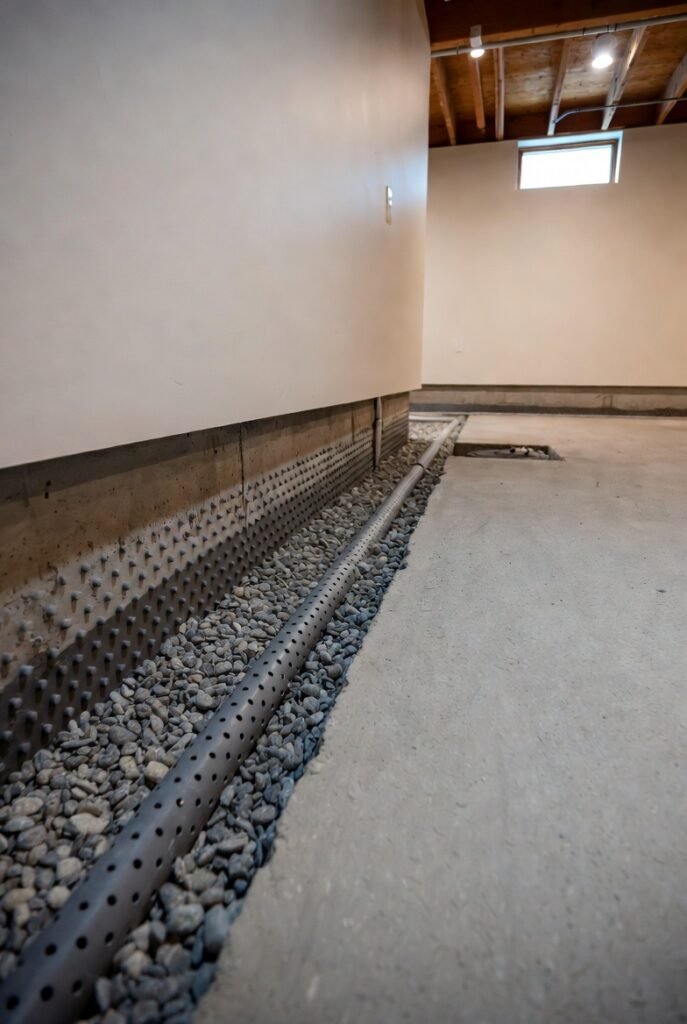
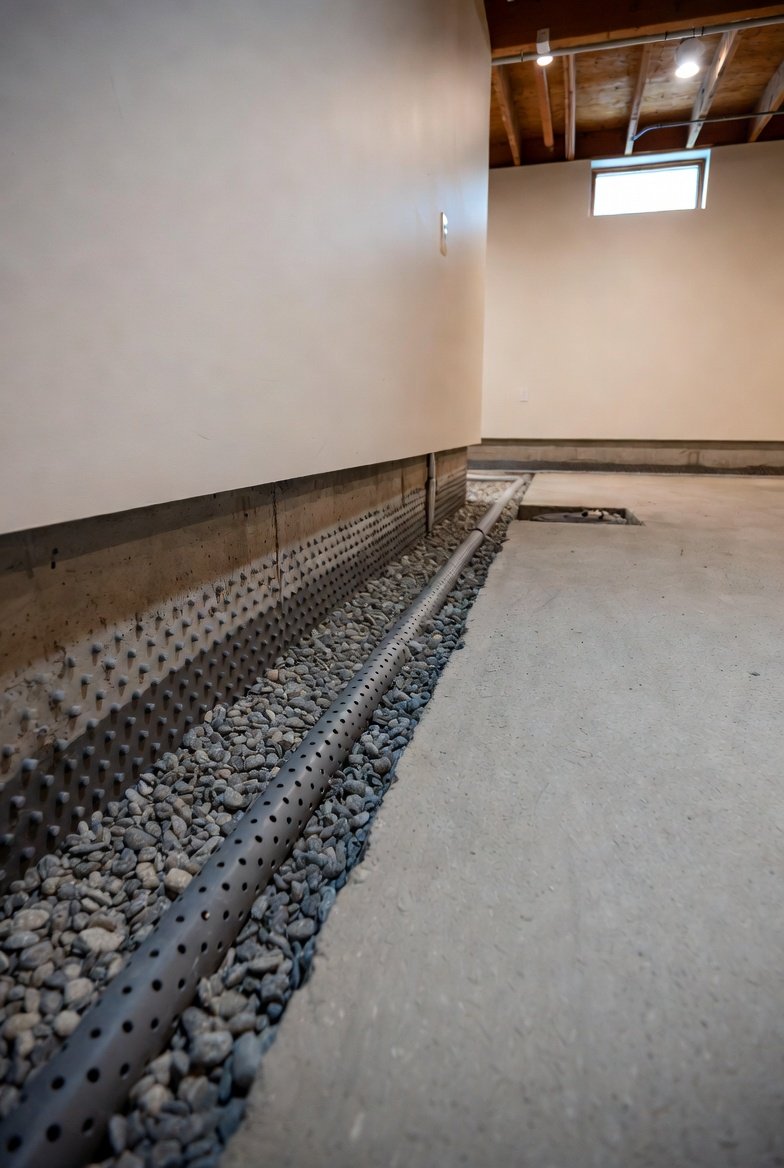
French Drain Installation
Most French drains fail for one reason:
They were installed like landscaping — not engineered like drainage control.
Hydrostatic pressure builds silently against your foundation.
Water looks for the weakest point.
Hairline cracks become seepage.
Seepage becomes damage.
A French drain is not decorative gravel in a trench.
It is a pressure relief system designed to intercept groundwater before it forces its way into your structure.
This guide explains French drain installation from an engineering standpoint — including slope calculations, soil considerations, interior vs exterior systems, cost drivers, maintenance protocol, and failure modes.
If you’re diagnosing active basement water issues, review:
👉basement-drainage-system
Drainage only works when integrated into a complete water control strategy.
Why French Drains Work: Hydrostatic Pressure Explained
When soil around a foundation becomes saturated:
- Water fills pore spaces
- Pressure builds against foundation walls
- Concrete cracks under repeated pressure cycles
- Water enters through cold joints or micro-fractures
A properly installed French drain:
- Lowers groundwater level near foundation
- Relieves lateral pressure
- Redirects flow safely away
Foundation drainage principles are consistent with building science guidance from the U.S. Department of Energy Building America program, which emphasizes controlling bulk water at the foundation perimeter to prevent moisture intrusion.
Without pressure relief, waterproof coatings alone are insufficient.
Interior vs Exterior French Drain — Decision Matrix
Not every water issue needs excavation.
Symptom | Likely Cause | Recommended Drain Type |
Water pooling near foundation exterior | Poor surface drainage | Exterior French drain |
Basement wall seepage after heavy rain | Hydrostatic pressure | Interior perimeter drain |
Yard slopes toward home | Surface runoff | Curtain/interceptor drain |
Repeated foundation dampness | Groundwater table high | Exterior perimeter + sump |
If your basement system depends on a sump pump, evaluate outage protection here:
👉battery-backup-sump-pump-installation
Slope Engineering: The 1% Rule (And Why It Matters)
Minimum recommended slope:
1% grade (1 inch drop per 8–10 feet)
Why?
If slope is too shallow:
- Water stagnates
- Sediment accumulates
- Pipe clogs prematurely
If slope is too steep:
- Flow velocity increases
- Sediment bypasses fabric
- Downstream discharge erosion occurs
In flat terrain:
- Tie into sump basin
- Or run solid pipe to lower daylight location
Gravity is non-negotiable.
Soil Type & Drain Performance
Soil affects longevity more than pipe size.
Soil | Impact | Design Adjustment |
Sandy | Excellent drainage | Standard install |
Loam | Moderate | Proper fabric separation |
Clay | Poor infiltration | Heavy-duty fabric + deeper trench |
Clay soils require strict separation between native soil and gravel using nonwoven geotextile fabric to prevent clogging.
Failure to separate layers causes sediment infiltration within 1–3 years in heavy clay environments.
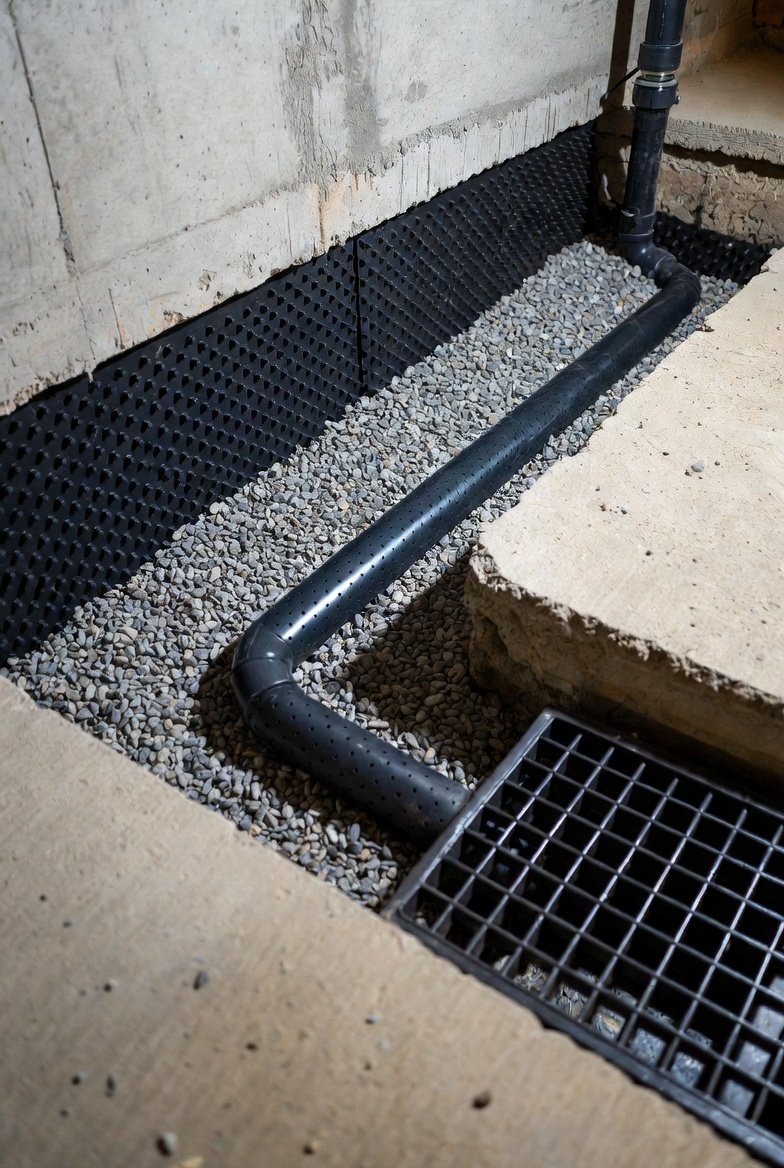
Step-by-Step Exterior French Drain Installation (Engineering Standard)
1️⃣ Mark utilities (call 811)
2️⃣ Excavate trench to footer level
3️⃣ Establish 1% slope using string line or laser level
4️⃣ Install nonwoven geotextile fabric
5️⃣ Add 2–3 inches washed gravel base
6️⃣ Install perforated pipe (perforations positioned to allow water entry while maintaining support)
7️⃣ Backfill with gravel
8️⃣ Wrap fabric over gravel
9️⃣ Install cleanout port at accessible end
🔟 Connect discharge safely away from foundation
Discharge must slope away from home per standard drainage guidance.
Interior French Drain Installation Overview
Interior systems:
- Remove perimeter slab section
- Install drain at footer base
- Tie into sump pump basin
- Re-pour slab
Interior systems manage water after it reaches foundation wall, but before it rises to slab level.
If sump pump reliability is critical, review:
👉basement-sump-pump-installation
Cost Drivers — Why Exterior Costs More
Typical ranges:
Type | Estimated Cost |
Interior perimeter | $50–$100 per linear foot |
Exterior perimeter | $80–$150 per linear foot |
Yard curtain drain | $25–$75 per linear foot |
Exterior costs increase due to:
- Excavation equipment
- Soil disposal
- Landscaping restoration
- Foundation wall exposure
- Waterproof membrane integration
Clay soil and deep footers increase labor time significantly.
For total system planning, see:
👉basement-waterproofing-cost
Maintenance & Inspection Protocol (Often Ignored)
Install a cleanout port at the high point.
Annual checklist:
- Inspect discharge outlet
- Check for standing water
- Flush system if sediment suspected
- Inspect for root intrusion
- Confirm no freeze blockage in cold climates
Camera inspection every 3–5 years for high-risk properties.
French drains are low-maintenance — not no-maintenance.
Common Failure Scenario
Case:
30-foot drain installed with only 0.2% slope in clay soil.
After two seasons:
- Sediment buildup at low point
- Pipe partially clogged
- Water stagnates
- Pressure returns to foundation
Homeowner assumes “drain didn’t work.”
Problem was grade miscalculation.
Precision matters.
When NOT to Install a French Drain
French drains are not universal solutions.
Avoid if:
- Roof downspouts discharge at foundation
- Grading slopes toward house
- Plumbing leak misdiagnosed as groundwater
- Crack injection alone would resolve issue
Diagnose first. Install second.
Freeze & Frost Depth Considerations
In cold climates:
- Install below frost line where applicable
- Ensure discharge does not freeze
- Avoid surface pooling near outlet
Frozen discharge equals total system failure.
Final Verdict
French drain installation is about intercepting groundwater and relieving pressure — not burying pipe.
Installed correctly:
- Reduces foundation stress
- Protects finished basements
- Extends structural lifespan
Installed casually:
- Clogs
- Backflows
- Fails silently
Drainage must be engineered, sloped correctly, discharged properly, and maintained periodically.
Done right, it becomes a cornerstone of foundation protection.