
French Drain Installation Cost: What You’re Actually Paying For
A French drain is not waterproofing.
It is a pressure relief system.
That distinction matters — because installation cost is driven by hydrostatic force, soil resistance, excavation depth, and discharge engineering. When you understand what the system is controlling, the price range stops looking random.
This page explains the real pricing logic behind French drain installation so you can evaluate quotes based on engineering conditions — not guesswork.
If you’re unclear how these systems integrate structurally, review the full system framework here:
Interior vs Exterior French Drain: Cost Decision Matrix
Before discussing numbers, you must determine configuration.
Condition | Best System | Typical Cost Range | Why |
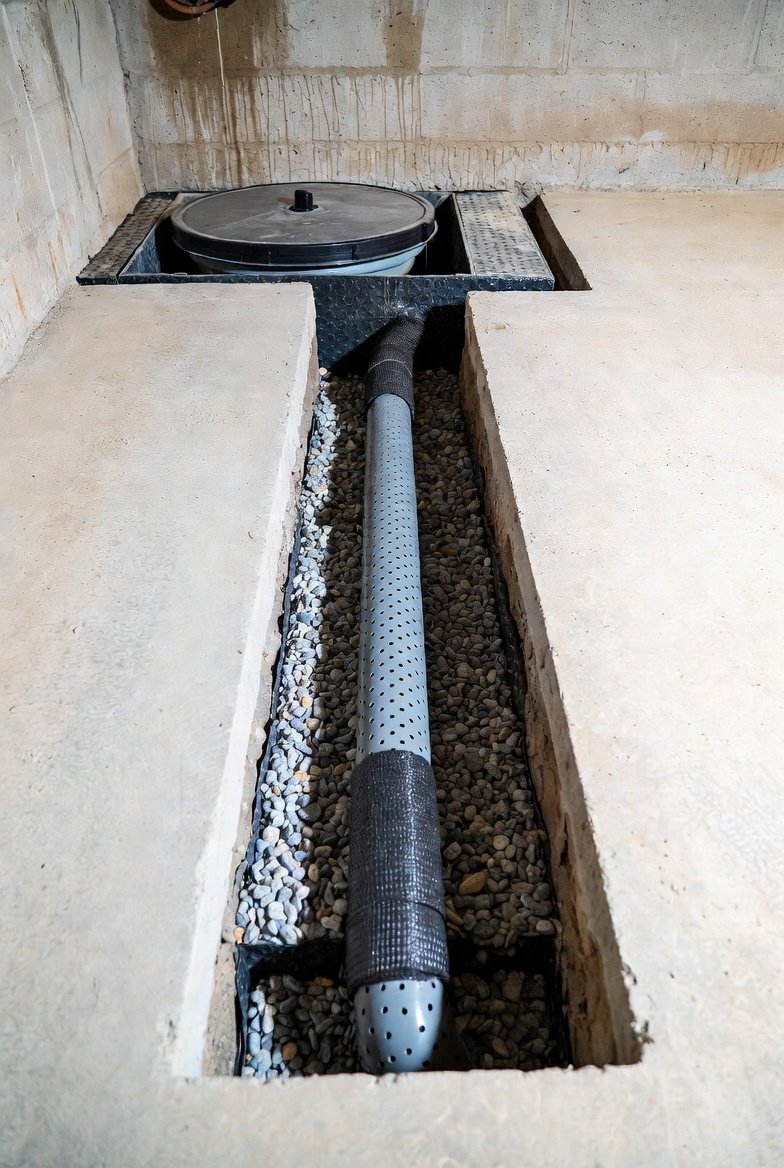
Water enters at wall-floor joint | Interior perimeter | $8,000 – $25,000+ | Slab cutting + sump integration |
Yard saturation near foundation | Exterior perimeter | $5,000 – $18,000 | Intercepts water before wall contact |
Flat terrain, no slope | Interior + sump | Higher | Gravity discharge not possible |
Clay soil + poor grading | Exterior + grading | Higher | Pressure + slow percolation |
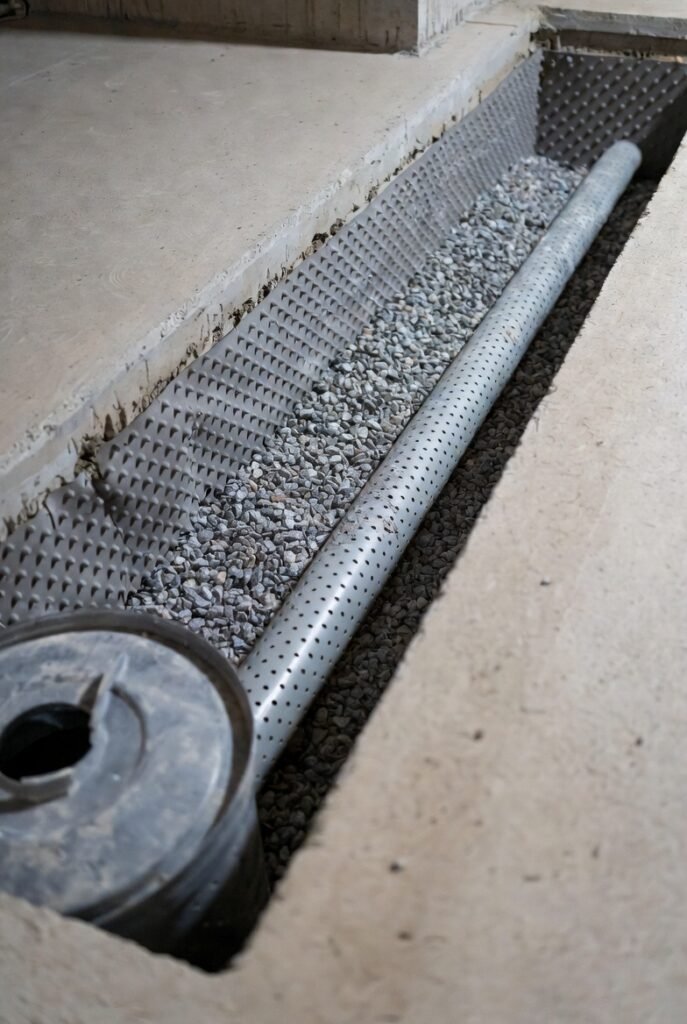
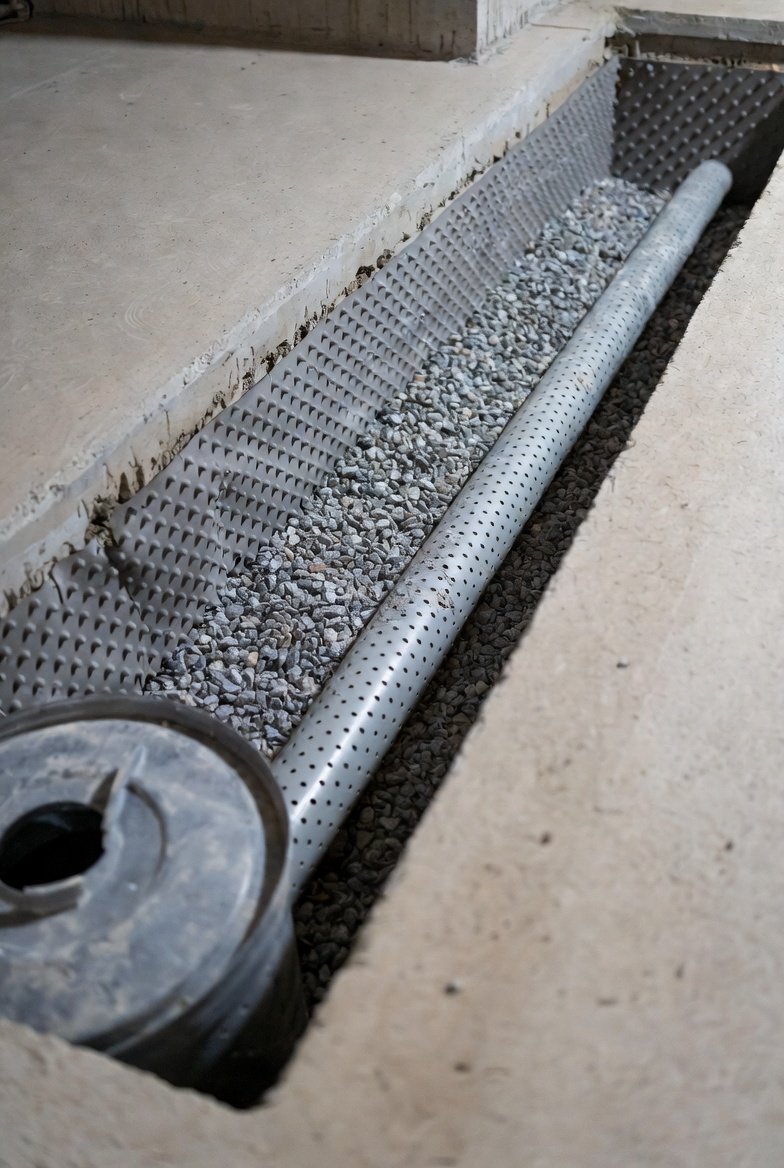
Interior systems are more invasive but often necessary when water has already reached footing level.
Exterior systems intercept subsurface water earlier — but require excavation depth and access.
If gravity discharge is not feasible, sump integration is required.
See installation details here:
basement-sump-pump-installation
For layered redundancy planning:
battery-backup-sump-pump-installation
Average French Drain Installation Cost
Installation Type | Total Cost | Per Linear Foot |
Exterior yard drain | $1,500 – $7,000 | $15 – $45 |
Exterior foundation perimeter | $5,000 – $18,000 | $35 – $85 |
Interior basement perimeter | $8,000 – $25,000+ | $50 – $120+ |
Regional labor rates, excavation conditions, and discharge complexity shift these ranges.
Where the Cost Actually Goes
French drain installation is labor-dominant.
Cost Component | Approximate Share |
Labor & excavation | 40–60% |
Gravel + perforated pipe | 10–20% |
Concrete cutting & restoration | 15–25% (interior systems) |
Landscape restoration | 10–30% |
Pump & electrical integration | Variable |
Material cost is relatively stable. Excavation complexity is not.
Primary Cost Drivers (Ranked by Engineering Impact)
1. Soil Composition
Soil Type | Cost Effect | Engineering Impact |
Clay | +15–30% | Slow drainage + clog risk |
Rocky | +20–40% | Difficult trenching |
Sandy | Neutral | Easier excavation |
Clay requires higher-quality fabric separation and cleanout access. Without this, long-term clogging risk increases.
2. Excavation Depth & Footing Exposure
Deeper foundations increase:
- Labor time
- Safety measures
- Soil removal volume
Cold climates require deeper frost-line compliance, which raises trench depth.
3. Discharge Engineering
A French drain is only as effective as its discharge path.
Proper systems require:
- Minimum 1% slope
- Protected termination point
- Separation from gutter discharge
- Freeze protection planning
Improper discharge design is one of the most common failure causes.
If the issue is active flooding, stabilize first:
water leak emergency
Failure Cost Economics (Often Ignored in Quotes)
Lower bids frequently omit long-term protections.
Failure Scenario | Potential Cost |
Sediment clogging | $4,000 – $12,000 |
Re-trenching interior slab | $5,000 – $15,000 |
Mold remediation | $2,000 – $10,000 |
Structural crack repair | $3,000 – $20,000 |
Skipping fabric separation or slope verification reduces upfront cost — but multiplies replacement risk.
Lifecycle Economics (20–30 Year View)
Component | Expected Service Life |
Perforated pipe | 20–30 years |
Fabric separation layer | 15–25 years |
Sump pump | 7–12 years |
Backup battery | 3–6 years |
Maintenance includes:
- System flushing every 2–3 years
- Outlet inspection annually
- Pump testing quarterly
For broader cost comparison including full waterproofing layers:
When NOT to Install a French Drain
A French drain is not appropriate if:
- Water originates from roof runoff only
- Surface grading alone can resolve pooling
- Plumbing leaks are misdiagnosed as groundwater
- Structural foundation repair is required first
Drainage solves pressure, not structural defects.
Regional Cost Adjustments
Condition | Cost Impact |
Urban limited access | +15–25% |
High water table | +10–30% |
Deep frost line | +10–20% |
Extensive hardscape removal | Variable |
These multipliers explain why two homes with similar footage may receive drastically different quotes.
What This Investment Actually Solves
French drains relieve hydrostatic pressure before it:
- Forces water through wall joints
- Increases lateral soil stress
- Expands minor cracks
- Accelerates structural deterioration
It does not seal the foundation.
It reduces the water force acting against it.
Frequently Asked Questions
How much does French drain installation cost per foot?
Exterior systems range from $15–$45 per foot. Interior perimeter systems commonly range from $50–$120+ per foot.
Why is interior installation more expensive?
Interior systems require concrete cutting, trenching, sump integration, and restoration.
Does clay soil increase installation cost?
Yes. Clay slows excavation and increases clogging risk, requiring upgraded separation layers.
How long does a French drain last?
Typically 20–30 years when properly installed and maintained.
Do I always need a sump pump?
Only if gravity discharge cannot be achieved due to terrain elevation.
Is the cheapest quote risky?
Often. Lower bids frequently omit slope verification, fabric upgrades, or redundancy planning.
Final Assessment
French drain installation cost reflects engineering conditions:
- Soil resistance
- Excavation depth
- Discharge design
- Pressure intensity
When the system matches the water source and pressure mechanism, it becomes structural protection.
When it does not, it becomes buried liability.