
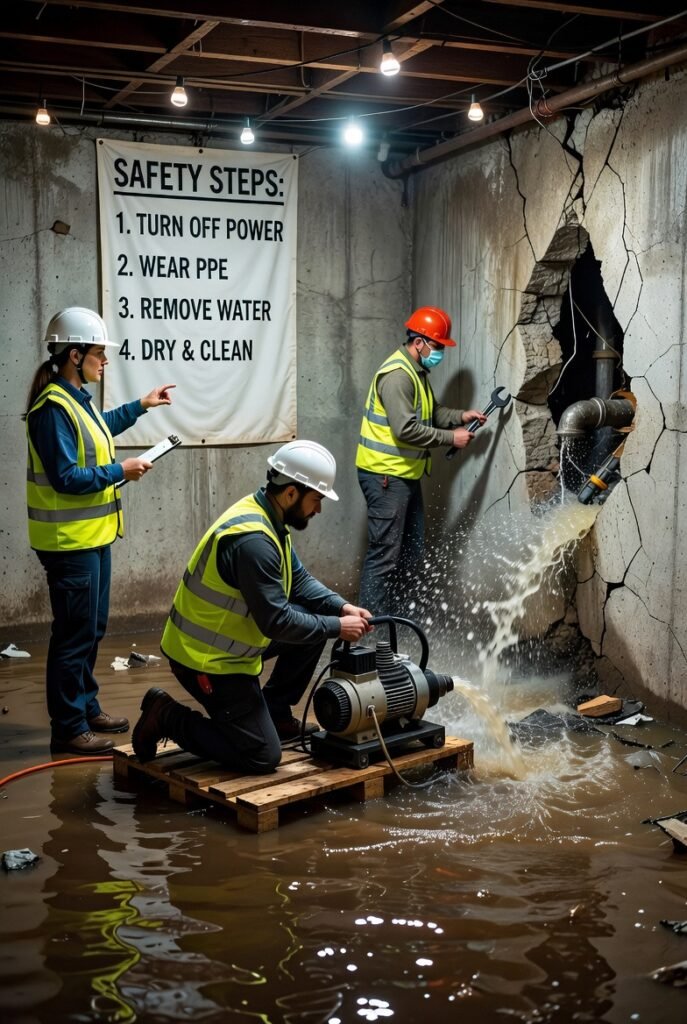
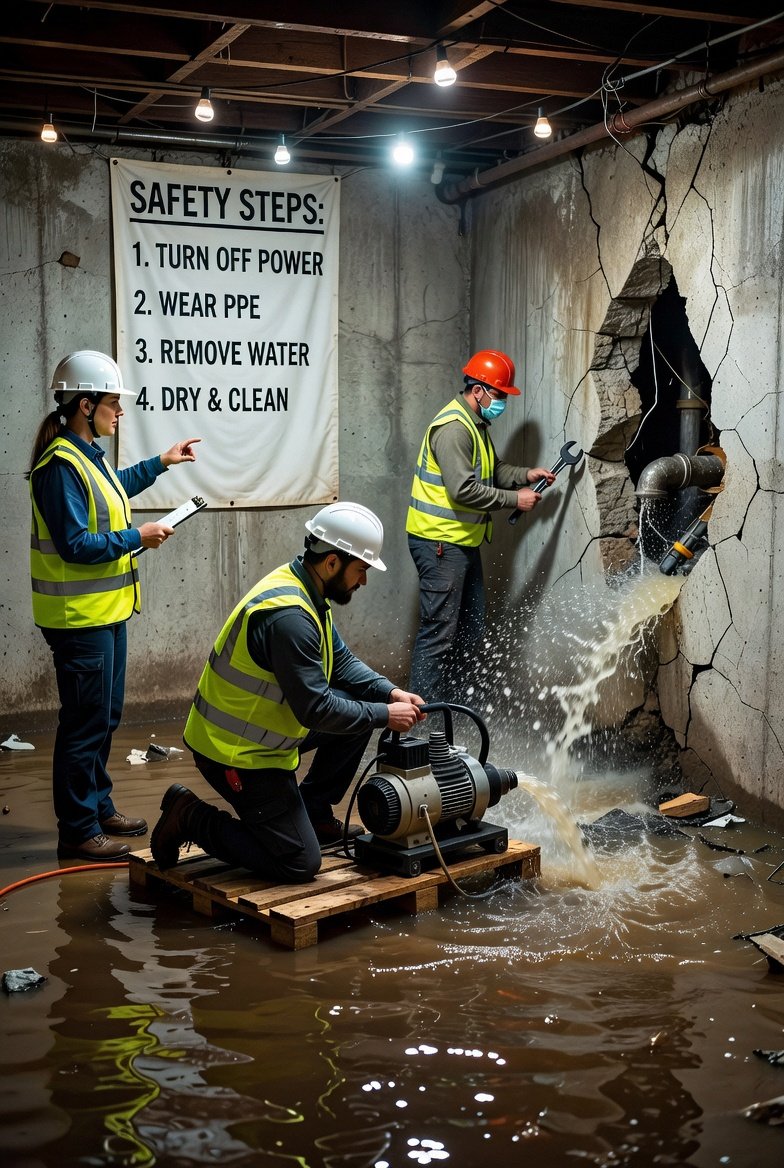
Flooded Basement: What To Do Immediately (Emergency Guide)
A flooded basement is a controlled response situation — not a cleanup project.
Before touching anything, stabilize the environment.
Water may involve:
- Electrical hazard
- Sewage contamination
- Hydrostatic pressure failure
- Mechanical sump breakdown
Follow this sequence carefully.
🔴 Emergency Safety First — Do Not Enter Until This Is Checked
Do NOT enter the basement if:
- Water surrounds the electrical panel.
- Outlets are submerged.
- You smell gas.
- Water appears contaminated (toilet overflow, strong sewage odor).
If safe to do so:
- Shut off basement power at the main breaker.
- Wear rubber boots and gloves.
- Avoid direct skin contact with standing water.
Electrical + water = primary risk.
Step 1: Stop Flood Water at Its Source
If Plumbing Burst:
- Shut off the main water valve immediately.
- Open a faucet upstairs to relieve pressure.
If Sump Pump Failure:
- Check breaker.
- Verify float switch moves freely.
- Inspect discharge pipe for freezing or blockage.
Sump troubleshooting guide:
basement-sump-pump-installation
Battery backup planning:
battery-backup-sump-pump-installation
If Heavy Rain / Groundwater:
You may not stop inflow immediately. Focus on controlled pumping and later drainage diagnosis.
Emergency reference:
Step 2: Identify the Type of Flood (Critical)
Not all floodwater is equal.
Category | Source | Health Risk | Action |
Clean Water | Pipe, rain | Low | Dry quickly |
Grey Water | Appliance overflow | Moderate | Disinfect surfaces |
Black Water | Sewage backup | Severe | Professional remediation required |
⚠ Do not attempt DIY cleanup of sewage-contaminated water.
The EPA and IICRC guidelines classify sewage as high-risk contamination requiring protective handling.
Step 3: Emergency Basement Water Removal
If safe:
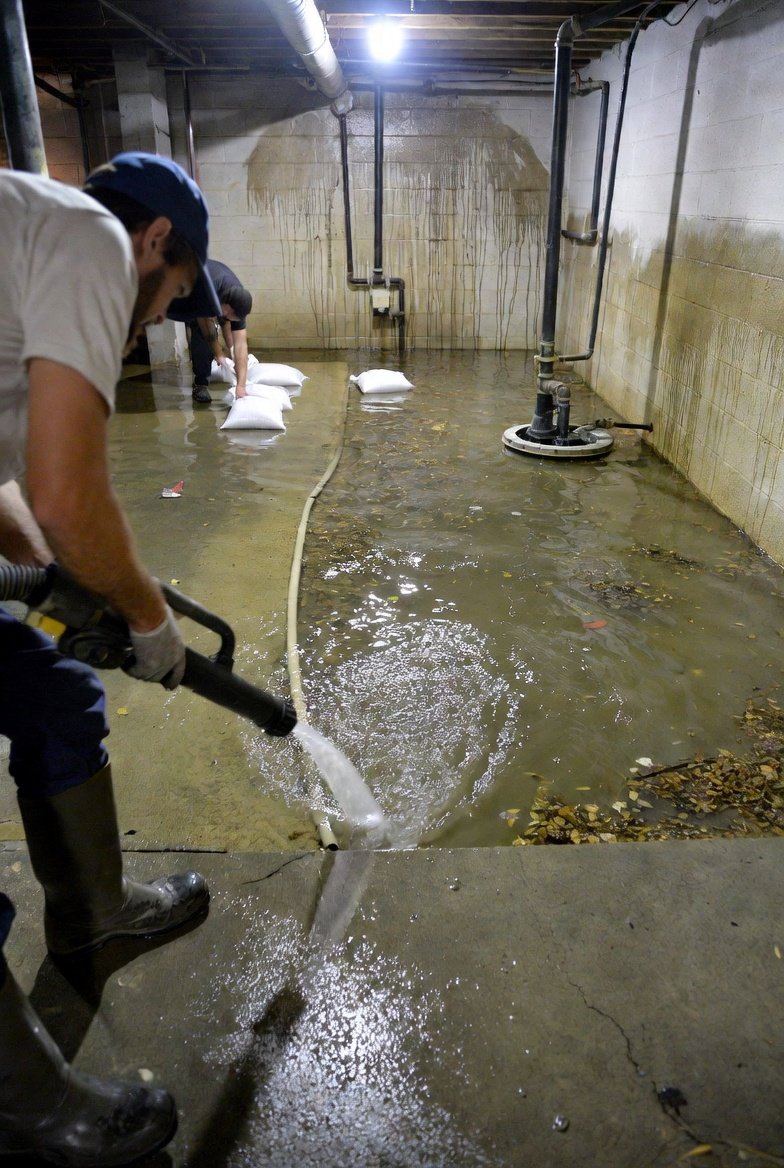
- Use a wet/dry vacuum for shallow water.
- Use a submersible pump for larger volumes.
Typical residential submersible pumps remove 1,000–2,500 gallons per hour (GPH).
For a 1,500 sq ft basement with 1 inch of water (~900 gallons), removal may take 1–3 hours depending on pump capacity.
If water exceeds 12 inches across the entire basement, pump gradually.
Step 4: Aggressive Drying to Prevent Mold
You have 24–48 hours before mold growth risk increases.
Target Conditions:
- Indoor humidity below 50%
- Continuous dehumidifier operation
- Strong air movement
Use:
- 2–3 high-capacity dehumidifiers (for 1,500 sq ft space)
- Box fans to circulate air
- Open windows only if outside humidity is lower
Remove immediately if saturated:
- Carpet padding
- Pressboard furniture
- Wet insulation
- Ceiling tiles
If drywall is wet above 12–18 inches, removal may be necessary to prevent trapped moisture.
Drying is about moisture content — not appearance.
Step 5: Document Damage for Insurance
Before disposal:
- Photograph damage
- Record water depth
- Save rental receipts
- Note time of event
Many policies require documented proof of cause and loss.
Step 6: Call a Professional Immediately If:
- Electrical system submerged
- Sewage contamination present
- Water depth exceeds several inches across full area
- Horizontal wall cracks visible
- Repeated flooding within 12 months
- Sump failure during heavy rainfall
Clear thresholds reduce risk.
Step 7: Diagnose the Structural Cause
Flood cleanup without root cause correction leads to recurrence.
Symptom → Likely Cause Map
Symptom | Likely Source |
Water at cove joint | Hydrostatic pressure / failed drainage |
Water mid-wall | Crack or wall penetration |
Water near window | Window well overflow |
Flood after sump ran | Discharge blockage |
Flood during snowmelt | Frozen discharge or high water table |
Exterior drainage explanation:
Interior pressure management:
Most recurring floods indicate drainage system imbalance.
Step 8: Long-Term Prevention Ladder
Flood prevention must be layered.
Immediate Fixes
- Extend downspouts 6–10 feet from foundation
- Ensure grading slopes minimum 1% away
Short-Term
- Install sump pump battery backup
- Add check valve if missing
Medium-Term
- Install interior perimeter drain if cove joint seepage recurring
Long-Term
- Install exterior footing-level drainage for persistent hydrostatic pressure
Full system overview:
Flooding is rarely random.
It is usually pressure mismanagement.
Common Mistakes After Basement Flooding
- Replacing carpet too soon
- Ignoring small recurring seepage
- Not testing sump quarterly
- Leaving discharge exposed in winter
- Assuming “once-in-100-year storm” explanation
Recurring floods signal unresolved drainage issues.
When Flooding Indicates Structural Concern
Seek structural evaluation if:
- Horizontal cracks appear
- Wall bowing observed
- Slab heaving visible
- Persistent seepage after drainage upgrade
Flooding can be a symptom of sustained hydrostatic load.
Quick Jump Guide
- Jump to Water Removal → Step 3
- Jump to Mold Prevention → Step 4
- Jump to Structural Diagnosis → Step 7
- Jump to Prevention → Step 8
FAQ
What should I do first if my basement floods?
Shut off electricity and identify the water source before entering standing water.
How long does water removal take?
A typical 1,500 sq ft basement with 1 inch of water may take 1–3 hours using a 1,500–2,500 GPH pump.
How quickly does mold grow?
Mold can begin within 24–48 hours in damp conditions.
Can I reuse flooring after flooding?
Solid surfaces may be salvageable if dried quickly. Carpet padding usually must be discarded.
How do I prevent sump pump failure in winter?
Ensure discharge lines are insulated, sloped correctly, and free of ice blockage.
Is mold inspection necessary after minor flooding?
If humidity was not reduced below 50% within 48 hours, inspection is recommended.
When should I call a structural engineer?
If wall bowing, horizontal cracks, or slab movement is visible.
Will a French drain stop basement flooding?
When properly installed, drainage systems reduce hydrostatic pressure and recurring groundwater intrusion.