
Sump Pump Installation: How Sump Systems Work and What They’re Designed to Control
Introduction
Sump pump installation is often described as a fix.
In reality, it’s better understood as a control mechanism within a basement drainage system—not a solution by itself.
When groundwater collects beneath a structure, pressure builds. Once that pressure reaches a release point—usually the lowest area below the slab—water needs a controlled exit.
A sump pump system exists for that moment.
It:
- Does not stop water from arriving
- Does not seal a foundation
- Does not waterproof a basement
It manages controlled water removal after water has already reached the collection zone.
This guide explains:
- How sump pump systems work
- What sump pump installation actually accomplishes
- When it applies
- Where its responsibility clearly ends
What Sump Pump Installation Refers To
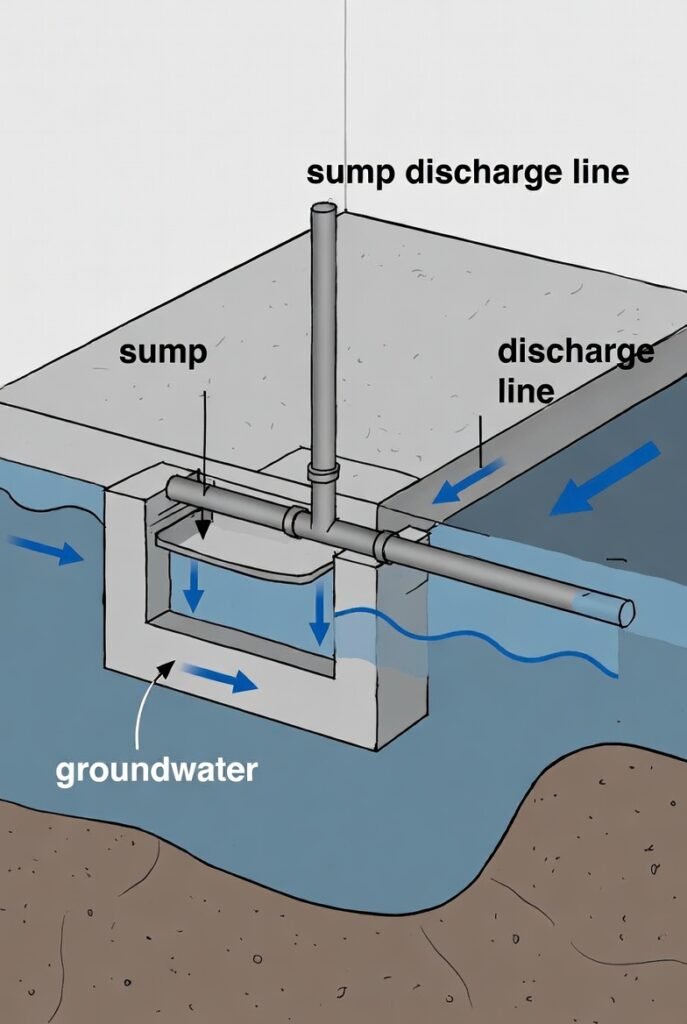
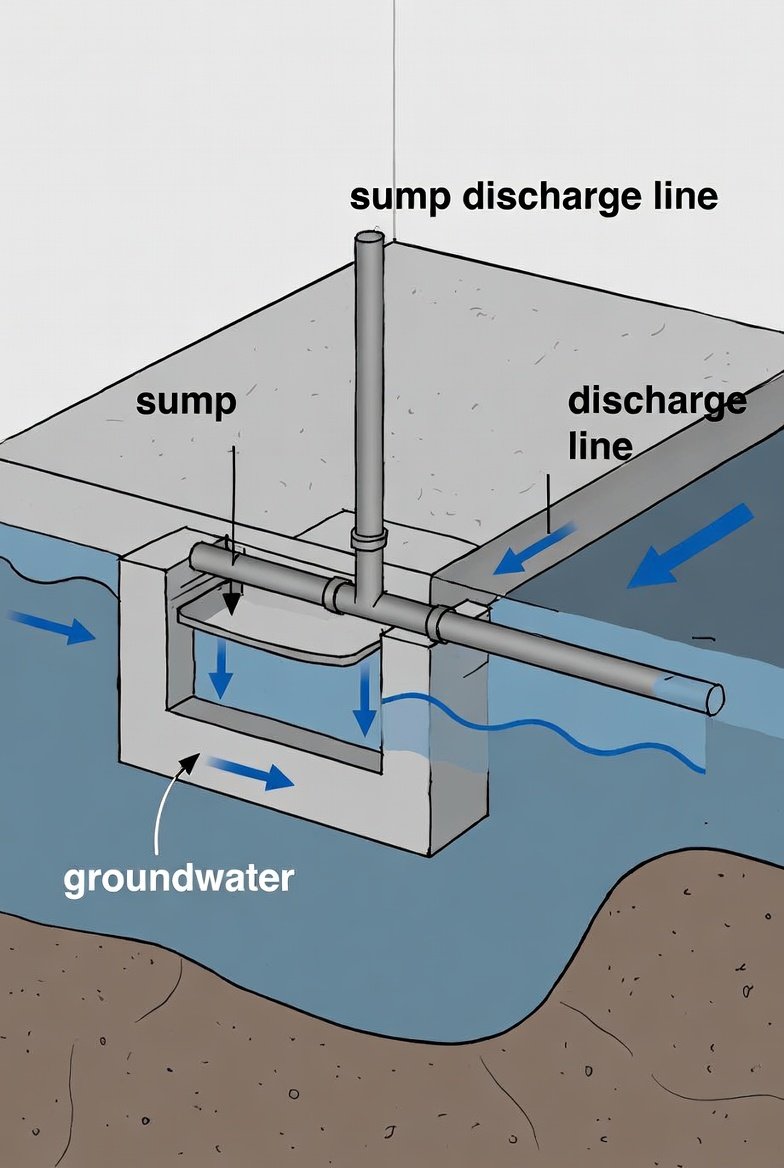
Sump pump installation refers to the placement and integration of a pump system designed to remove collected groundwater from beneath a basement drainage slab.
A typical basement sump pump system includes:
- A sump pit set below slab level
- A pump that activates as water rises
- A discharge line that routes water away
- A check mechanism to prevent backflow
- A power source, sometimes with redundancy
The pump itself is only one component.
The system is the relationship between drainage, activation, and discharge.
What a Sump Pump System Is
(Functional Definition)
A sump pump system is a reactive water-removal mechanism.
It activates only after water has already accumulated at a defined low point.
Its function is to:
- Accept water routed into the sump pit
- Lift that water above grade or to a safe outlet
- Prevent rising water levels beneath the slab
A sump pump system does not reduce hydrostatic pressure directly.
It manages the effects of pressure once water has already found a release path.
This distinction explains why sump pumps perform reliably in some scenarios—and fail in others.
Why Sump Pump Systems Exist
Sump pump systems exist because water always seeks the lowest available point.
In many homes:
- Groundwater rises during storms
- Subsurface water moves beneath the slab
- Interior drainage channels direct water inward
- Gravity concentrates water at one location
Without a controlled outlet, water rises until it:
- Spreads across the floor
- Or finds another uncontrolled exit
A sump pump provides a deliberate escape route, preventing uncontrolled accumulation.
How Sump Pump Systems Work
Sump pump systems follow a predictable cycle:
- Water reaches the collection zone
Water enters the sump pit via drainage paths or soil movement. - Water level rises inside the basin
The pit becomes a pressure-relief point. - Activation threshold is reached
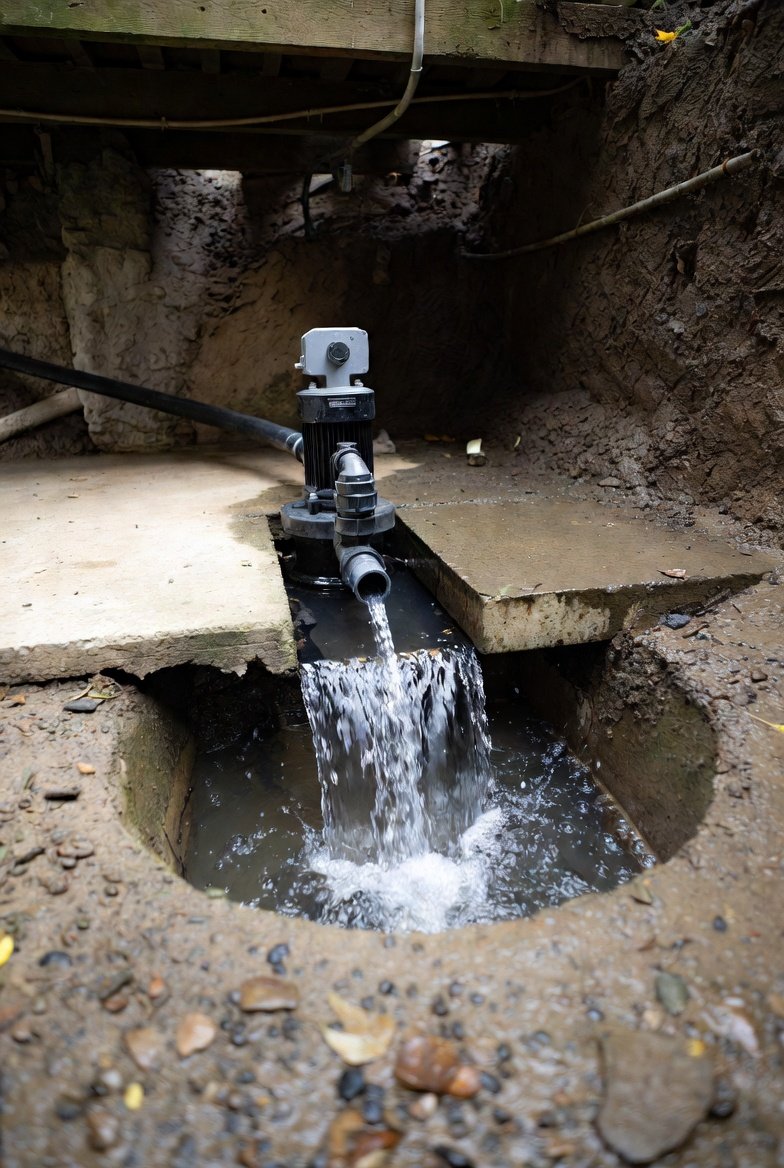
A float or sensor triggers the pump. - Water is lifted and discharged
The pump moves water through the discharge line. - System resets
Once water drops, the pump shuts off.
The system does not prevent water from arriving — it prevents accumulation from becoming damage.
How Sump Pump Systems Are Configured
Sump pump systems are configured around dependency, not complexity.
Most systems include:
- A primary pump handling routine groundwater rise
- Sometimes a backup sump pump for redundancy
- A discharge path that must remain clear and reliable
- A power source that determines system availability
Pump effectiveness depends less on horsepower and more on whether the system operates when water arrives.
What Sump Pump Installation Does Well
Sump pump installation is effective when water behavior matches its design role.
It performs best when:
- Groundwater rises beneath the slab
- Interior drainage routes water to a central pit
- The issue is accumulation, not random entry
In these conditions, sump pump systems provide consistent, repeatable control.
What Sump Pump Installation Does Not Do
Sump pump systems have strict limits.
They do not:
- Stop water from entering the foundation
- Seal wall cracks or penetrations
- Correct exterior grading issues
- Prevent surface runoff problems
- Eliminate humidity or condensation
A sump pump manages volume, not cause.
Sump Pump Installation vs Drainage Systems
Drainage systems and sump pumps are connected—but not interchangeable.
- Drainage systems collect and direct water
- Sump pumps remove collected water
As explained in the Interior Drainage System guide:
- Drains accept that water will arrive
- Pumps provide the mechanical exit
Without drainage, sump pumps sit idle.
Without sump pumps, drainage has nowhere to discharge.
Why Sump Pump Systems Sometimes Fail
In most cases, sump pump failure reflects a dependency breakdown, not a mechanical defect.
Common causes include:
- Power interruption during storms
- Discharge paths that allow backflow
- Basin placement limiting intake
- Water volume exceeding system capacity
The pump may function correctly while the system as a whole underperforms.
Diagnostic Signals a Sump Pump Is Relevant
Sump pump systems tend to apply when:
- Water collects consistently at the lowest point
- Flooding worsens during prolonged rainfall
- Interior drainage feeds into a sump pit
- The basement remains dry outside groundwater events
These signals point to accumulation, not uncontrolled entry.
When Sump Pump Installation Is Secondary
Sump pump installation should not be treated as the primary response when:
- Water enters through foundation walls
- Surface runoff reaches basement openings
- Exterior drainage is absent or failing
In these cases, sump pumps may reduce damage—but they do not correct the underlying water path.
Bottom Line
What Sump Pump Installation Really Is
Sump pump installation is reactive water control, not basement waterproofing.
It:
- Does not stop water from arriving
- Does not seal a foundation
- Does not fix structural issues
It manages water after it has already collected, providing a controlled exit before accumulation becomes damage.
Used within the right system, it is effective and predictable.
Used alone, it is often misunderstood.