
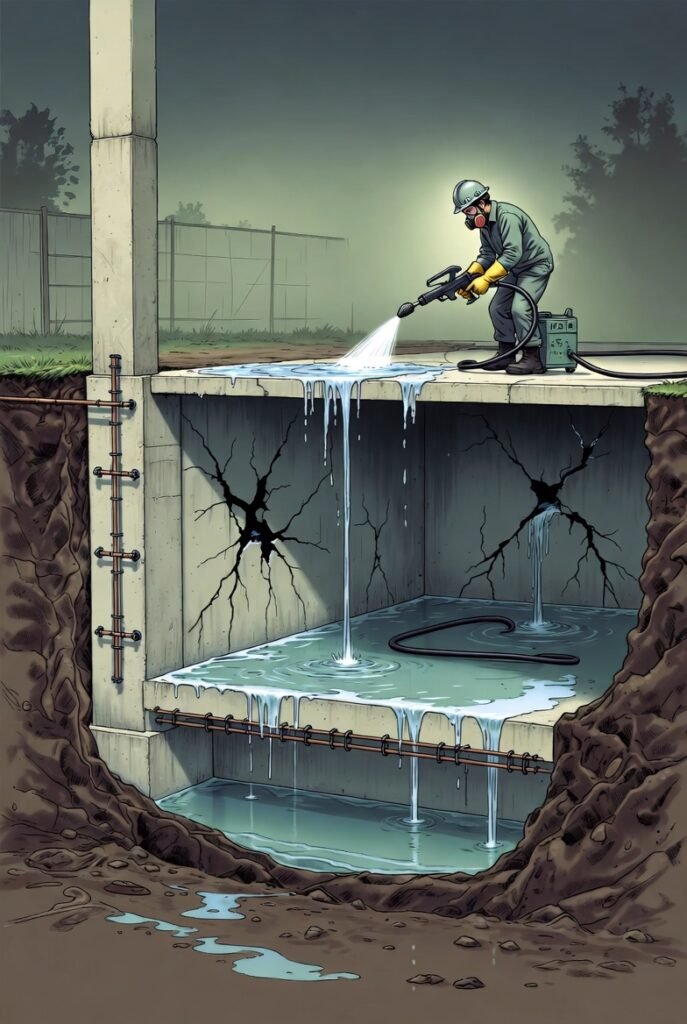
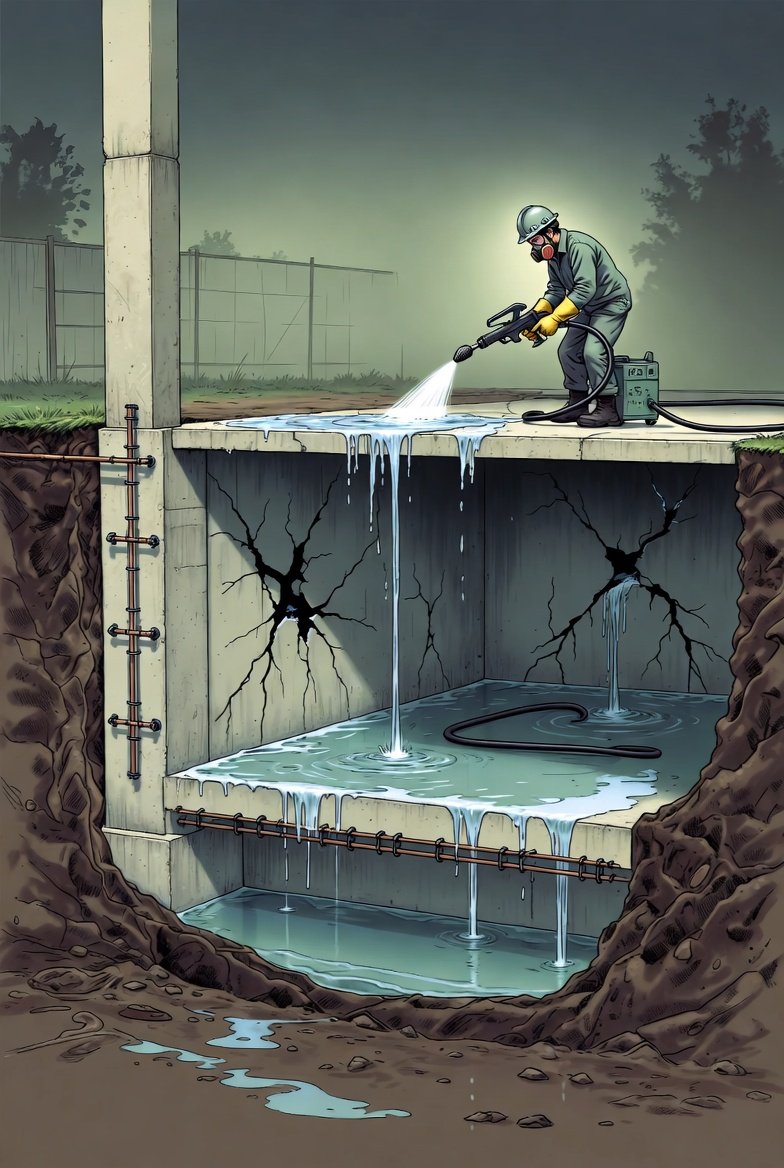
Exterior Basement Waterproofing: When Outside-Only Solutions Are Necessary
Introduction
Exterior basement waterproofing is often described as the “permanent” fix.
That description is partly true—and partly incomplete.
Exterior systems are not automatically better than interior ones. However, there are situations where outside-only waterproofing is the correct structural response, and interior solutions can never fully address the problem.
This guide explains:
- How exterior basement waterproofing actually works
- Why excavation and membranes exist
- What exterior systems do differently from interior approaches
- When exterior waterproofing is necessary, not optional
What Exterior Basement Waterproofing Is Designed to Do
Exterior basement waterproofing focuses on prevention before pressure forms.
Instead of allowing groundwater to reach the foundation and managing it inside, exterior systems aim to:
- Keep water from contacting foundation walls
- Reduce hydrostatic pressure at the footing
- Intercept surface and subsurface water early
- Protect masonry from long-term saturation
Basement Waterproofing Cost Per Linear Foot
This makes exterior waterproofing fundamentally different from interior systems.
Its goal is exclusion, not control.
How Water Reaches a Foundation From the Outside
Exterior water problems typically develop in stages:
- Rain or snowmelt accumulates near the foundation
- Soil becomes saturated and holds moisture
- Hydrostatic pressure increases against foundation walls
- Water migrates through porous masonry or cracks
Exterior waterproofing interrupts this process before step four.
That timing explains:
- Why excavation is required
- Why partial or surface-level solutions often fail
What Exterior Basement Waterproofing Actually Includes
Exterior waterproofing is not a single product.
It’s a continuous system installed along the foundation exterior.
Excavation to Footing Depth
Effective exterior waterproofing almost always requires digging down to the footing.
- Partial-depth excavation leaves pressure zones untreated
- Footing-level access determines long-term success
This is the most disruptive step—and the most critical.
Foundation Wall Preparation
Once exposed, foundation walls are:
- Cleaned
- Inspected
- Repaired if cracks or deterioration exist
Waterproofing materials fail if applied over unstable surfaces.
Waterproof Membranes and Coatings
Membranes create a continuous barrier that resists moisture under pressure.
- Liquid-applied coatings or sheet membranes
- Designed for exclusion under pressure, not cosmetic sealing
Exterior Drainage at the Footing
Most exterior systems include drainage tile or gravel channels at footing level.
Purpose:
- Relieve pressure
- Prevent standing water against membranes
Membranes without drainage are vulnerable over time.
Backfill and Site Restoration
After installation:
- Soil is replaced
- Landscaping, walkways, or hardscaping are restored
Restoration is often a major part of project scope.
When Exterior Basement Waterproofing Is Necessary
Exterior waterproofing is usually required when moisture intrusion is driven by outside conditions, not internal pressure alone.
It’s often necessary when:
- Water penetrates directly through foundation walls
- Moisture appears mid-wall rather than at joints
- Exterior grading directs water toward the foundation
- Soil remains saturated for long periods
- Interior systems repeatedly fail
In these cases, managing water after entry is structurally insufficient.
Why Partial Exterior Waterproofing Often Fails
A common SERP failure pattern is spot exterior waterproofing—treating only one wall or section.
Partial systems fail because:
- Pressure redistributes to untreated areas
- Water finds alternative entry paths
- Footing-level pressure remains uncontrolled
Exterior waterproofing works best as a continuous perimeter system, not a patch.
Where Exterior Waterproofing Has Clear Advantages
Exterior systems excel when:
- Surface water management is the primary issue
- Foundation walls experience constant moisture exposure
- Long-term structural protection is a priority
- The basement will be finished or heavily used
By stopping water before contact, exterior waterproofing reduces long-term material degradation.
The Structural Limits of Exterior Basement Waterproofing
Exterior waterproofing is powerful—but not absolute.
It does not:
- Correct structural foundation movement
- Eliminate groundwater entirely
- Replace interior drainage when pressure rises beneath the slab
- Guarantee zero moisture under all conditions
It also introduces trade-offs:
- Excavation
- Disruption
- Higher cost
Exterior vs Interior Waterproofing
(Structural Boundary)
Exterior and interior waterproofing address different failure points.
Exterior Waterproofing
- Stops water before foundation contact
- Addresses surface and wall-based intrusion
- Requires excavation and restoration
- Focuses on exclusion
Interior Waterproofing
- Manages pressure after water reaches the structure
- Controls predictable seepage
- Minimizes disruption
- Focuses on redirection
The correct choice depends on why water is entering, not where it appears.
Timeline & Disruption Reality
(What Homeowners Should Expect)
Exterior waterproofing is not a same-day project.
Typical timelines:
- 1–2 days: Excavation (longer for deep or restricted access)
- 1 day: Wall prep and membrane installation
- 1 day: Drainage placement and inspection
- 1–2 days: Backfill and site restoration
Weather, permits, and utilities can extend timelines.
Permits, Utilities & Pre-Excavation Risks
Before excavation, contractors usually must:
- Locate underground utilities
- Secure permits (where required)
- Assess access near property lines
Ignoring this step increases risk and delays.
Responsible exterior waterproofing accounts for these realities upfront.
Why Exterior Waterproofing Is Often Called “Permanent”
Exterior systems earn the “permanent” label because they:
- Reduce repeated wall saturation
- Slow long-term masonry deterioration
- Lower freeze–thaw stress
- Protect structural materials over time
However, permanence depends on:
- Full-depth installation
- Effective drainage
- Stable soil conditions
- Ongoing surface water management
Without these, even exterior systems can underperform.
Cost Context
(Without Turning This Into a Pricing Page)
Exterior basement waterproofing costs more because it involves:
- Excavation labor
- Depth and access complexity
- Waterproofing materials and drainage
- Site restoration
Pricing details belong in dedicated cost guides, but understanding why exterior work costs more helps set realistic expectations.
Signs Exterior Waterproofing Is the Right Move
Exterior waterproofing is often appropriate if:
- Interior systems haven’t stabilized moisture
- Water enters through foundation walls
- Exterior grading or drainage is poor
- Long-term structural protection is a priority
If water intrusion is pressure-driven beneath the slab, exterior excavation may be unnecessary.
Bottom Line
Exterior basement waterproofing is a structural exception—not a default upgrade.
When water intrusion is driven by exterior saturation or wall penetration, outside-only systems address the problem at its source—before pressure damages the foundation.
When water intrusion is predictable and pressure-driven, interior systems may provide sufficient control with far less disruption.
Understanding why water enters your basement matters more than choosing a method by reputation.