
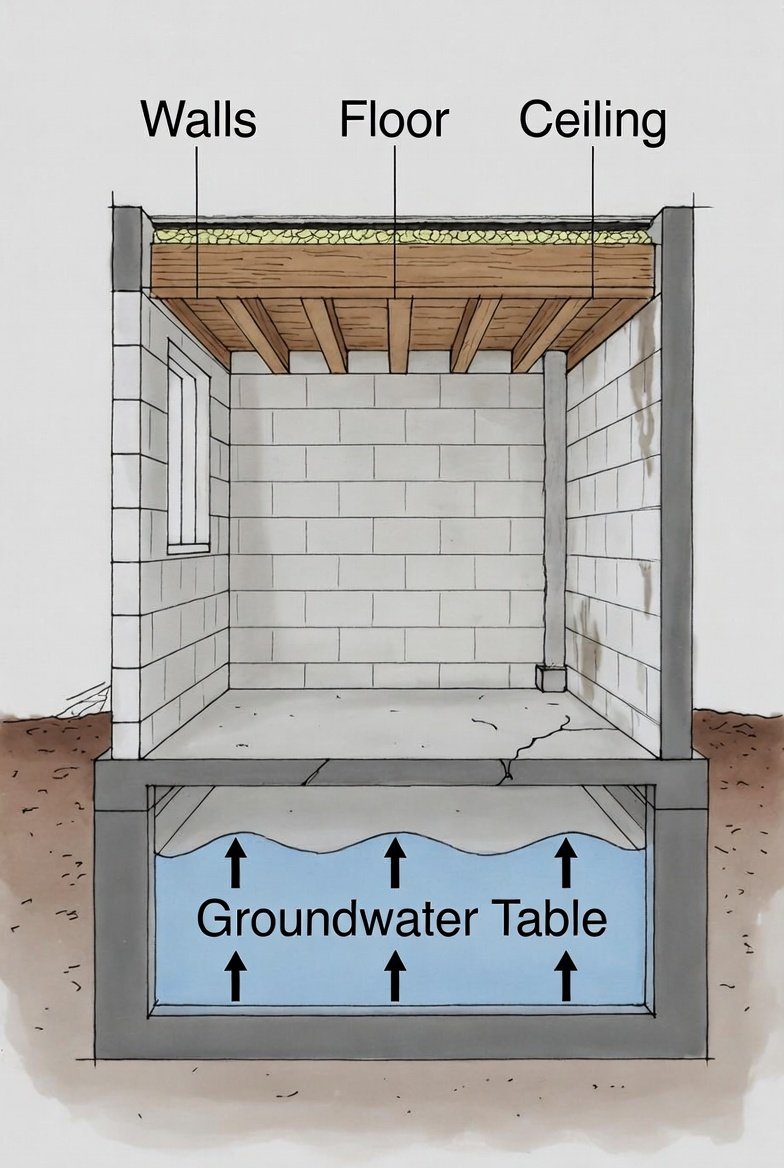
Basement Waterproofing Services: How to Choose the Right Solution for Your Home
Basement water problems rarely start as disasters. Most homeowners first notice something subtle: a faint musty odor, a darker strip along the wall–floor joint, or concrete that never fully dries after rain. These early signals are easy to ignore — but basement moisture almost never stays cosmetic. Once water patterns establish themselves, they tend to repeat.
What makes basement waterproofing services difficult to evaluate is that the visible symptom is usually the end result, not the real cause. The damp spot you see is just where pressure found an exit.
This guide explains what basement waterproofing services actually involve, how professionals decide between water control methods, and how to evaluate recommendations without relying on sales language or one-size-fits-all promises.
What Basement Waterproofing Services Are Really Designed to Do
A common misconception is that waterproofing means sealing a basement so water can never enter. In reality, concrete is porous, soil conditions change seasonally, and groundwater pressure constantly shifts. No basement behaves like a sealed container.
The real goal of basement waterproofing services is water control, not total exclusion.
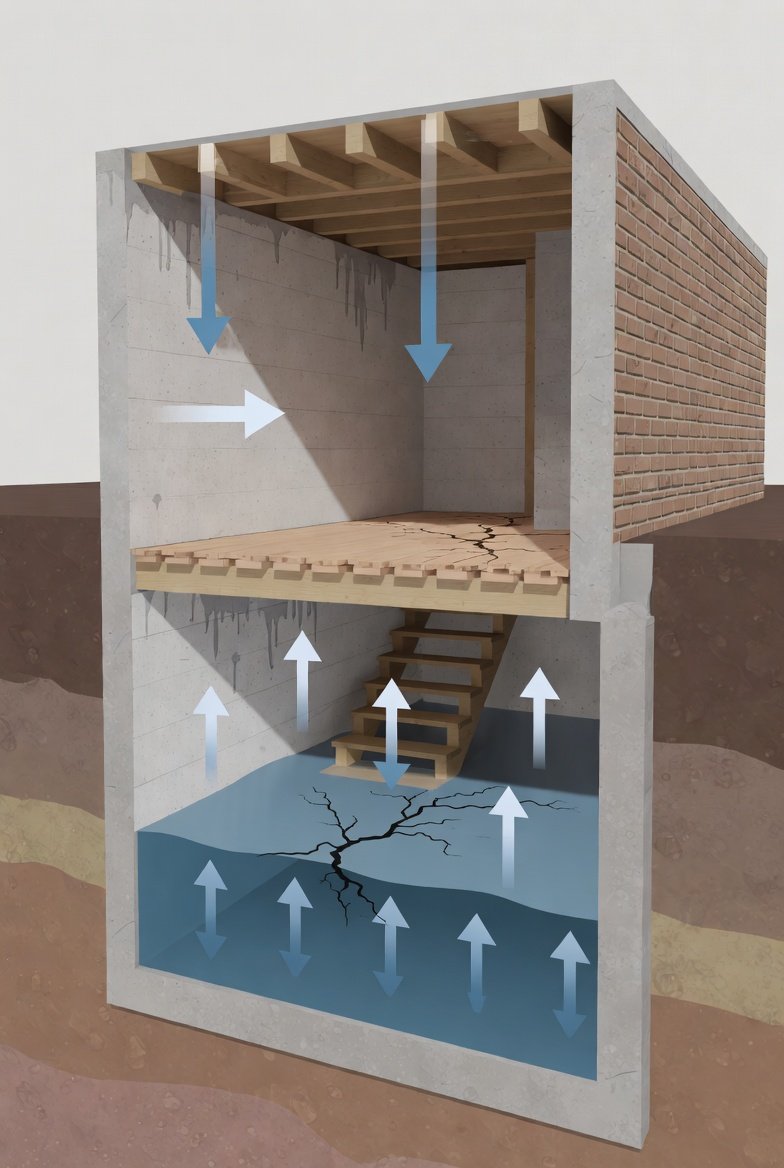
In building science, hydrostatic pressure — the force exerted by groundwater pushing against foundation walls and slabs — is the primary driver of basement moisture failure. Waterproofing systems are designed to manage that pressure safely.
A properly designed service focuses on four outcomes:
- Identifying the source of moisture or pressure
- Reducing or redirecting that pressure safely
- Giving water a predictable path away from the structure
- Protecting the foundation from long-term exposure
Services that skip diagnosis and jump straight to installation are solving the problem backwards.
Why the Source of Water Matters More Than the Leak You See
Two basements can show water in the same location and require completely different solutions.
One home may experience upward pressure through the slab. Another may experience lateral seepage through foundation walls after sustained rainfall. Sometimes surface runoff is the driver. Other times groundwater has nowhere to relieve pressure because of soil composition.
That’s why professional basement waterproofing services begin with pattern recognition, not product selection.
A proper assessment looks for:
- Repeating entry points after storms
- Mineral deposits or efflorescence on walls
- Wall–floor joint staining
- Exterior grading and downspout discharge paths
- Foundation age, type, and construction
- Seasonal patterns of moisture
Without this context, recommendations are educated guesses.
Quick Diagnostic Table: Common Water Patterns
Water Pattern | Likely Cause | Typical Control Strategy |
Water at wall–floor joint | Groundwater pressure buildup | Interior drainage system |
Damp walls after heavy rain | Lateral soil saturation | Exterior water management |
Water bubbling through slab | Upward hydrostatic pressure | Sub-slab pressure relief |
Moisture only in spring thaw | Seasonal soil expansion | Combination approach |
Musty air without visible leaks | Vapor diffusion & humidity | Dehumidification + sealing |
This table isn’t a replacement for inspection — it simply shows why one symptom can point to multiple root causes.
Interior Basement Waterproofing Services: What They Solve (and What They Don’t)
Interior basement waterproofing services are often misunderstood as a lesser option. In practice, they are engineered to manage groundwater pressure beneath or alongside the foundation.
Interior solutions are commonly used when:
- Water enters at the wall–floor joint
- Pressure builds beneath the slab
- Exterior excavation is impractical
- Structural walls remain sound
Interior systems intercept and redirect water after pressure develops but before damage occurs. They don’t stop groundwater from existing — they control where it goes.
Interior waterproofing has limits. A trustworthy provider explains those limits instead of presenting the system as universal.
(For a deeper breakdown, see Interior Basement Waterproofing.)
Exterior Basement Waterproofing Services: When They’re Necessary
Exterior basement waterproofing services address water before it contacts foundation walls. These approaches are more invasive but appropriate when structural contact is the failure point.
Exterior services are typically recommended when:
- Moisture penetrates directly through walls
- Soil remains chronically saturated
- Surface runoff overwhelms grading
- Interior methods have failed
Exterior waterproofing addresses contact, not symptoms. It isn’t automatically better — it’s situational.
(See Exterior Basement Waterproofing for structural differences.)
Real-World Scenario: Same Symptom, Different Solution
Consider two homes with identical wet corners.
Home A: Built on clay soil. Spring thaw traps water around the foundation. Interior pressure builds upward.
Home B: Built on sandy soil. Heavy rain flows horizontally into a weak wall seam.
Both show water in the same corner.
Home A needs sub-slab pressure relief.
Home B needs exterior water redirection.
The symptom is identical. The engineering logic is not.
This is why diagnosis matters more than system branding.
Basement Waterproofing Systems vs. Waterproofing Services
Homeowners often compare systems instead of services.
A system is a tool: drains, pumps, membranes, coatings.
A service is the professional judgment that decides:
- Which tools are needed
- Where they belong
- What failure mode they address
Two homes using the same system can experience completely different outcomes depending on whether the diagnosis was correct.
How Professionals Decide Which Service Fits a Home
Reputable waterproofing professionals follow a decision sequence:
- Identify dominant water source
- Analyze pressure behavior
- Assess structural tolerance
- Select the least invasive control method
- Add redundancy only when risk justifies it
If this reasoning isn’t explained clearly, the solution may still work — but you won’t know why.
Transparency is a stronger trust signal than confidence.
Waterproofing vs. Foundation Repair: A Critical Boundary
Basement waterproofing controls water.
Foundation repair addresses movement.
Water can contribute to structural issues, but waterproofing alone doesn’t correct settlement or wall displacement. Likewise, repairing cracks without pressure control often leads to repeat failure.
A credible provider explains where one service ends and the other begins.
Inspection Checklist Homeowners Can Use
You don’t need engineering training to spot warning signs:
- Do stains repeat after storms?
- Are downspouts discharging near the foundation?
- Does the basement smell damp year-round?
- Are walls showing white mineral residue?
- Does the slab stay dark in certain zones?
- Does grading slope toward the house?
Patterns matter more than isolated events.
Maintenance Expectations Most Homeowners Miss
Even well-designed waterproofing systems require realistic maintenance.
Sump pumps wear out.
Drainage systems can clog.
Humidity still needs management.
A responsible waterproofing service explains lifecycle expectations:
- Pump lifespan: 7–10 years
- Backup system checks: annually
- Drain inspection: periodic
- Dehumidifier upkeep: ongoing
Waterproofing is control, not elimination.
How Basement Waterproofing Services Are Priced
Costs vary because no two basements manage moisture the same way.
Factors include:
- Perimeter length
- Excavation depth
- Drainage complexity
- Pump redundancy
- Accessibility
- Labor conditions
Generic price ranges are unreliable. Detailed pricing belongs on a dedicated Basement Waterproofing Cost page, not in a service overview.
Red Flags That a Service May Be the Wrong Fit
Slow down if a contractor:
- Recommends the same system for every home
- Avoids discussing limitations
- Uses urgency instead of explanation
- Promises permanent results
- Minimizes inspection
In this niche, clarity beats persuasion.
How to Evaluate Recommendations Without Being an Expert
Ask:
- Does the explanation match what I see?
- Is the cause clearly linked to the solution?
- Were trade-offs acknowledged?
- Does the plan respect maintenance reality?
When a service fits, the logic feels grounded.
When to Move Forward — and When to Pause
Move forward when the service addresses the actual water behavior and explains its limits.
Pause when the recommendation feels generic or rushed.
Waterproofing decisions should feel informed, not pressured.
Bottom Line
The right basement waterproofing service doesn’t promise to make water disappear forever. It aims to make water predictable, controlled, and non-destructive.
When a provider explains not just what they’re installing but why it matches your home’s conditions, you’re likely choosing a solution that will hold up over time.
If you want to understand what solutions typically cost before moving forward, review our detailed basement waterproofing cost guide to set realistic expectations.